
Come, Horoes!
TYPE
Mobile Game
TIMELINE
Jan 2019 - Mar 2020
TEAM
Seeun (Game/Visual Design)
Seung (Development)
Urim (Sound Design)
TOOLS
Adobe CS (Visual Design)
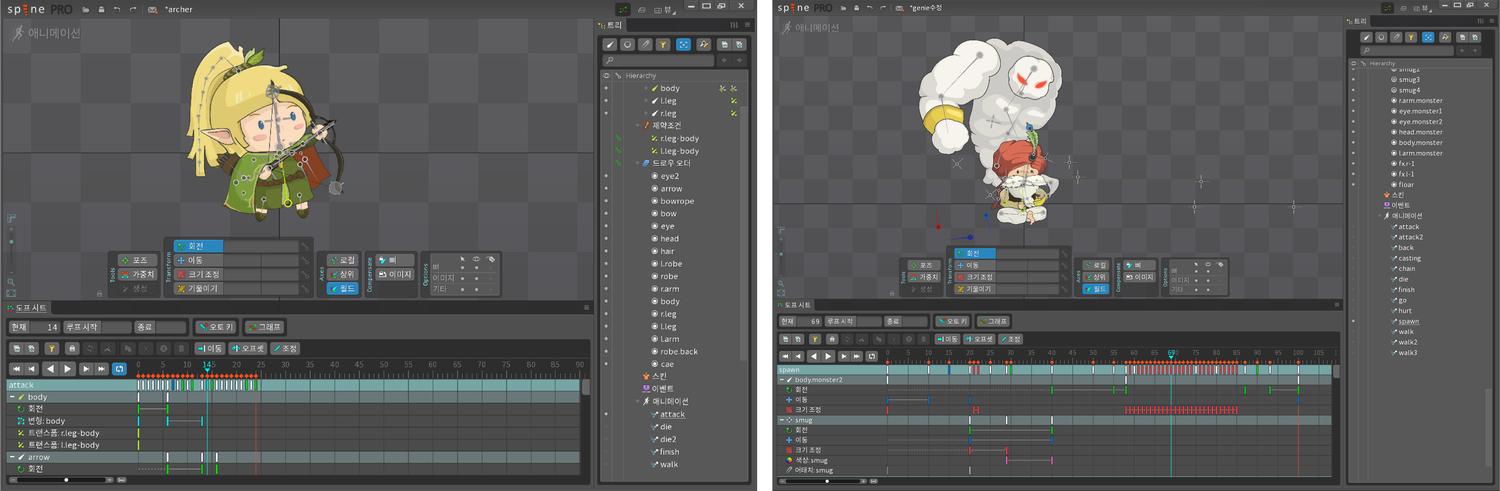
Spine (Animation)
Unity (Implementation)
Overview
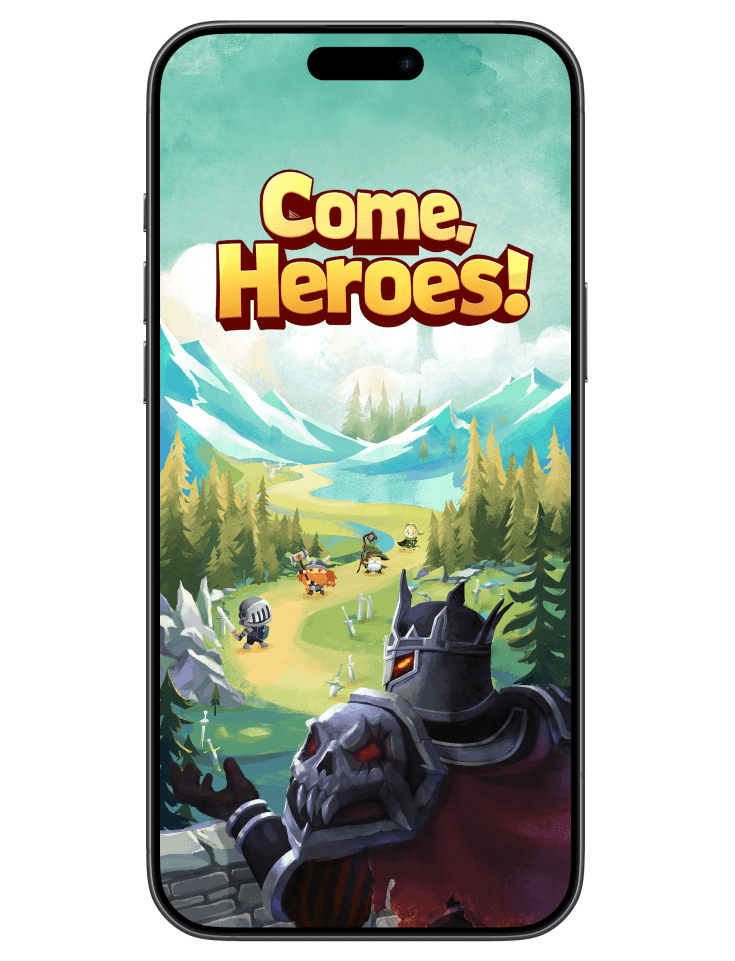
Come, Heroes! is a strategic defense mobile game where players defend their domain as a falsely accused lord mistaken for a Demon King. By reversing the traditional hero–villain dynamic, the game challenges players to strategically deploy traps against relentless invading heroes.
As my first game development project, it deepened my understanding of strategic design, player engagement, and interactive storytelling.
INTRODUCTION
Prologue
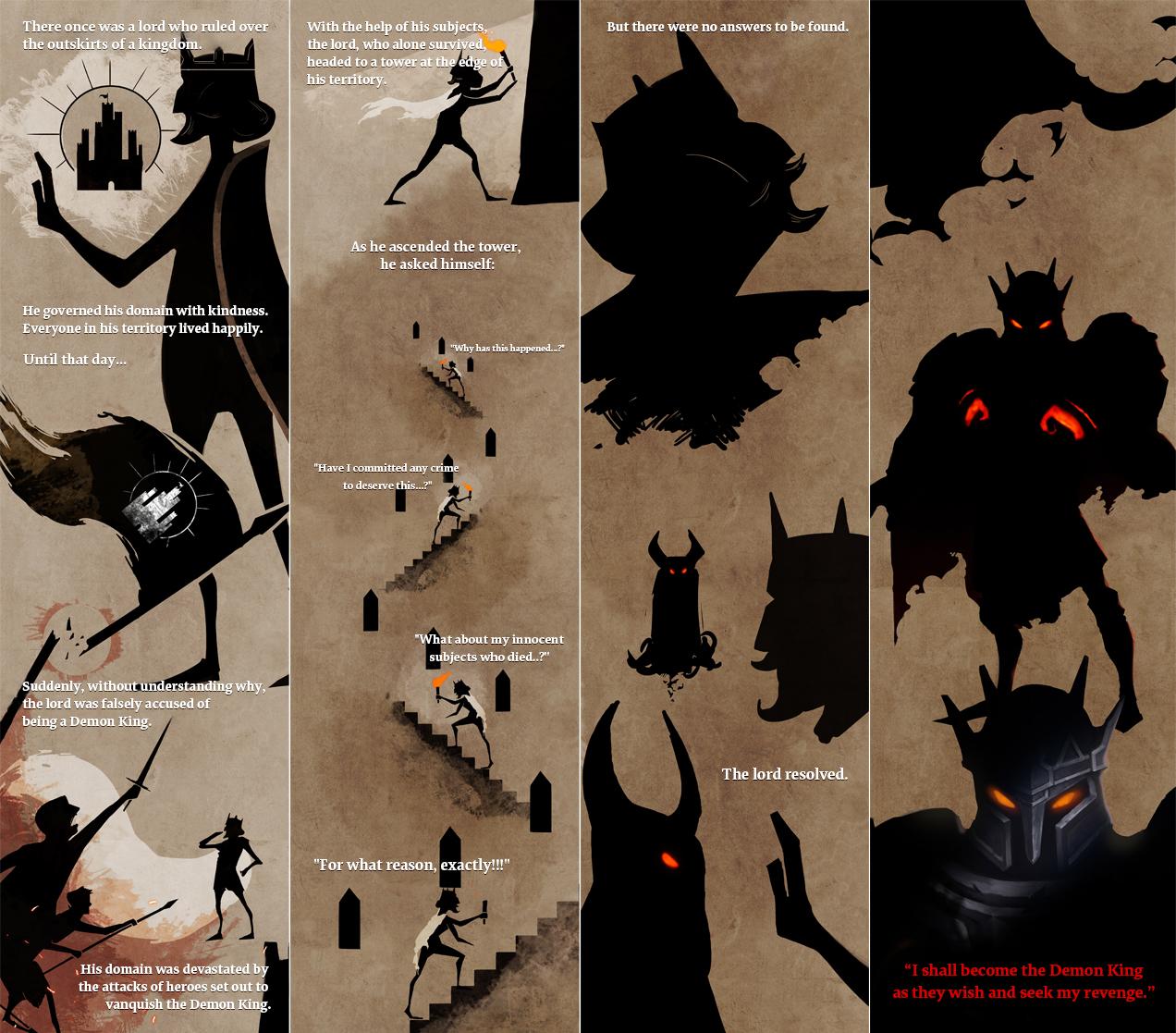
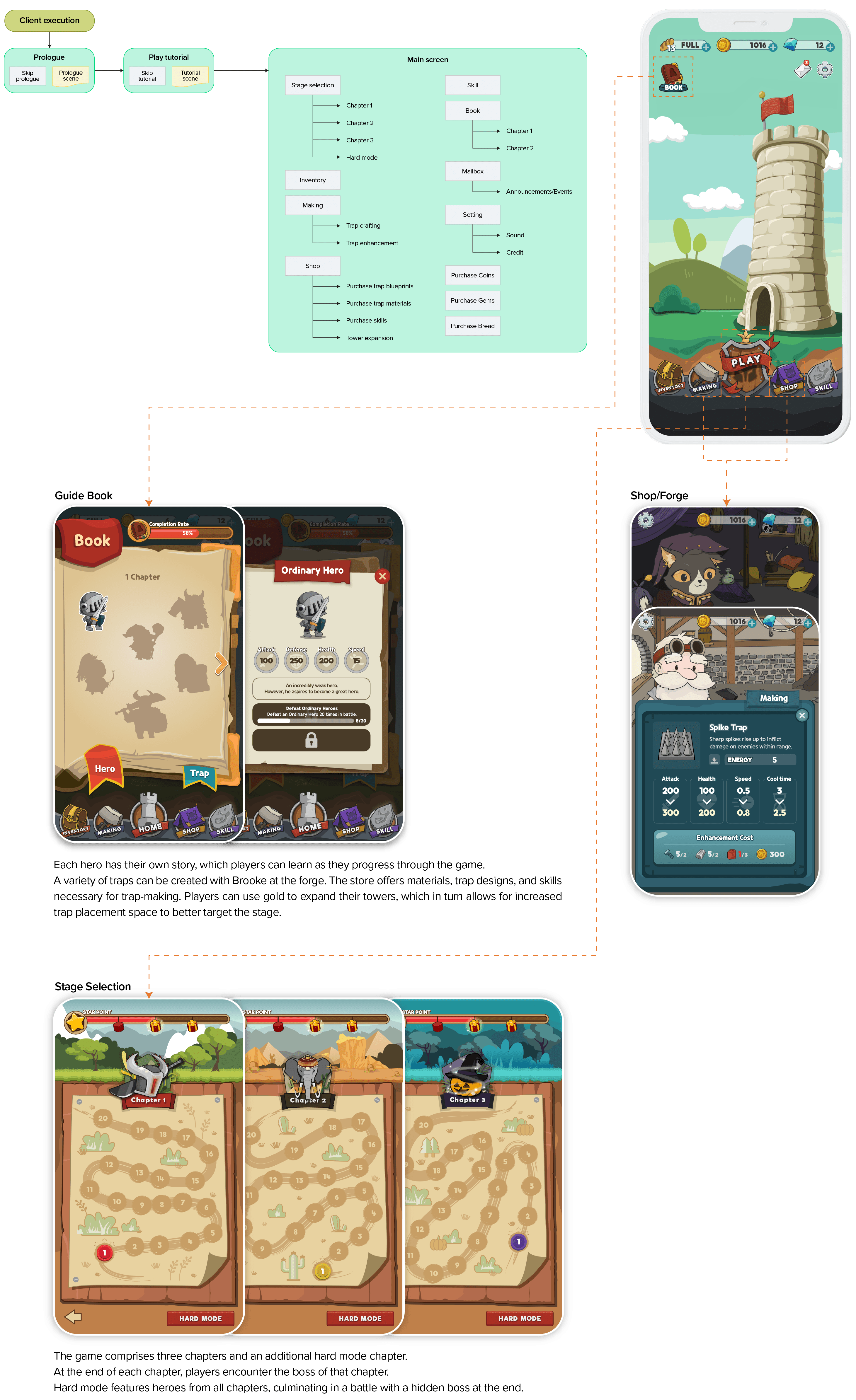
To help users easily understand the story, a scroll-down webtoon-style prologue appears when the game is first launched, enhancing immersion.
CHARACTERISTIC
Battle Flow
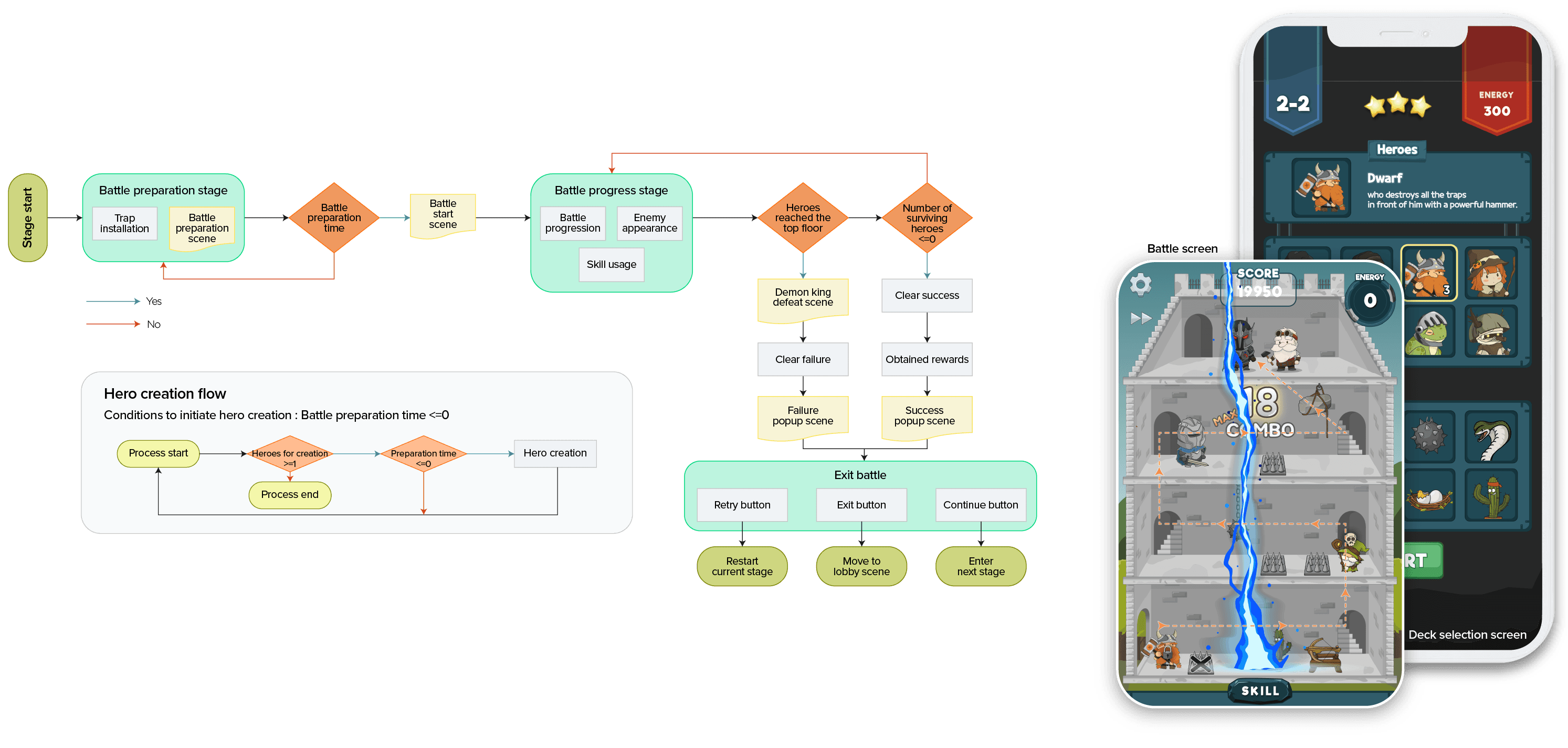
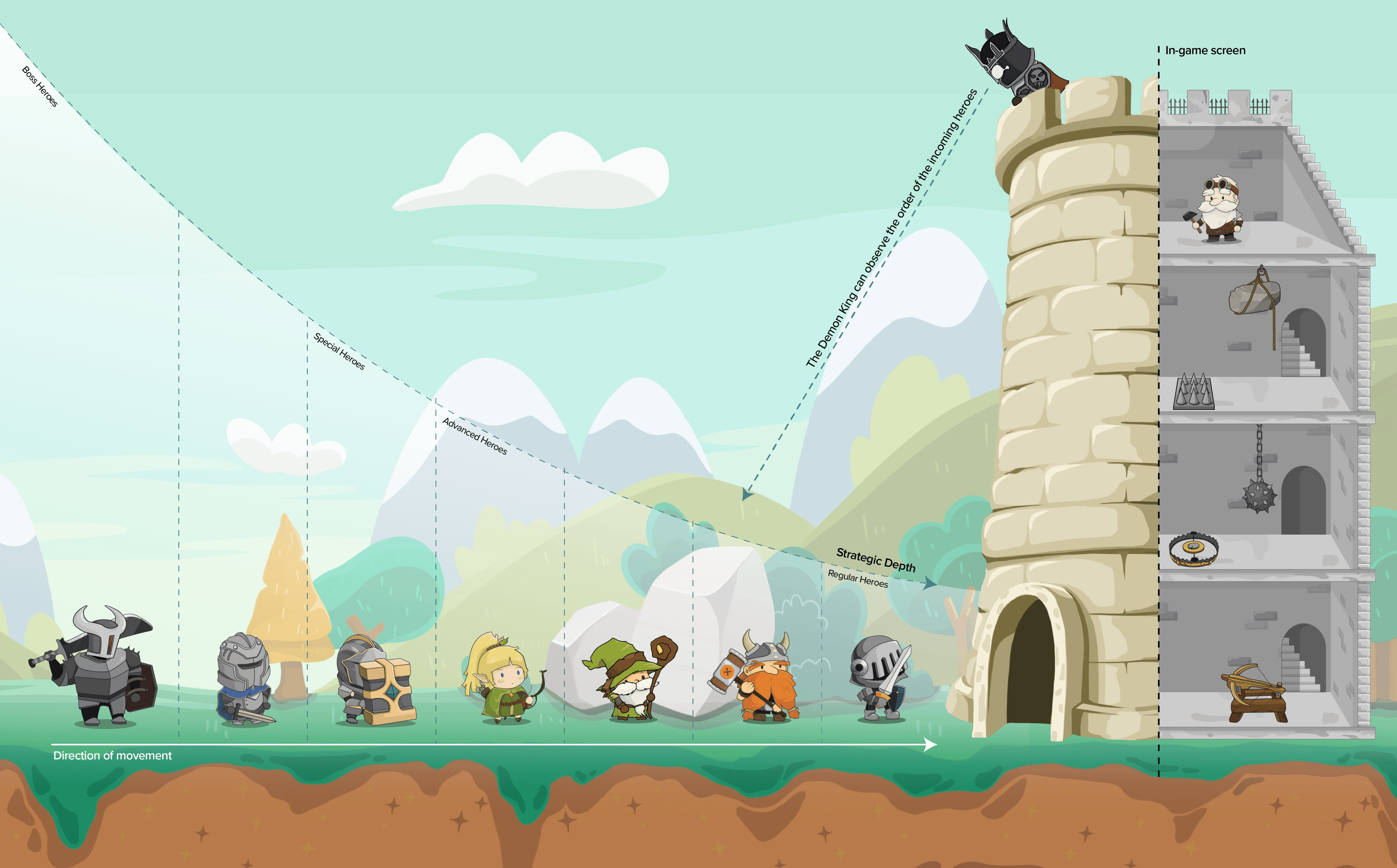
The game is strongly characterized by strategic and clicker elements. Since the order of the heroes' appearance is a key to the strategy, players must check the hero wave in advance, predict the battle pattern, and place traps accordingly. Additionally, players attack heroes by directly clicking on traps to activate them, enhancing the tactile enjoyment suitable for a mobile platform. This design leads players to experience more intense and speedy gameplay.
CHARACTERISTIC
Battle System
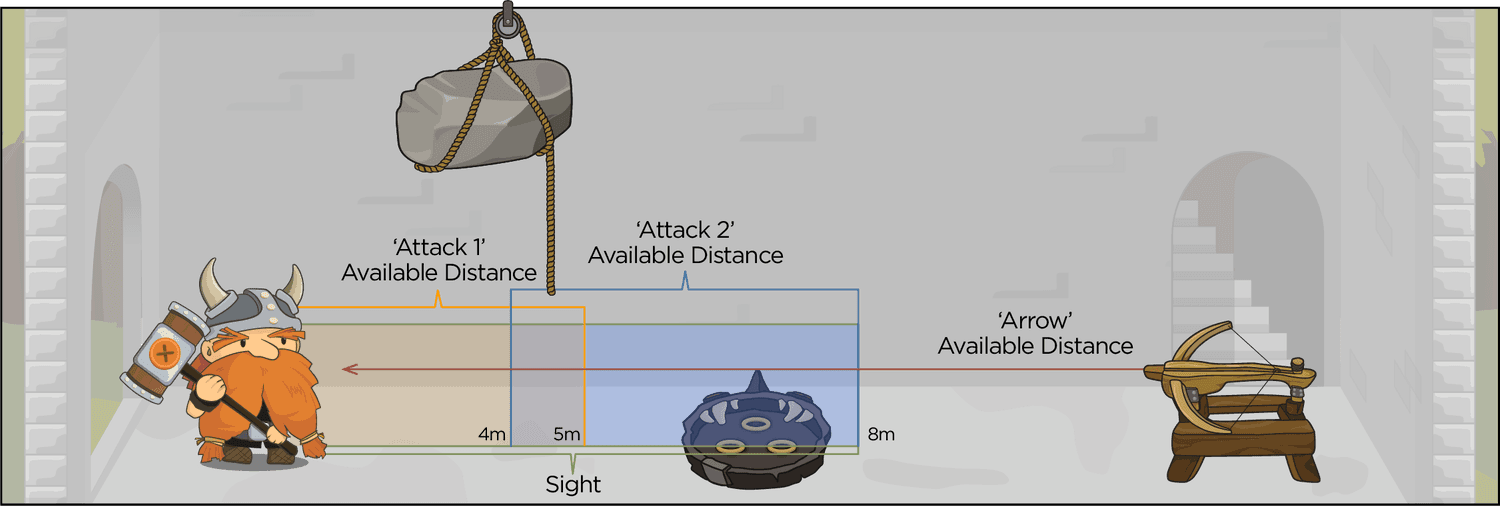
The player becomes the Demon King who must defend the tower from the invading heroes(enemies). Different heroes(enemies) appear in each stage, climbing the tower toward the Demon King(player) on the top floor. The player must install traps and use skills in the tower to defeat the heroes, preventing them from reaching the top floor.
CHARACTERISTIC
Composition
CHARACTERISTIC
Balance
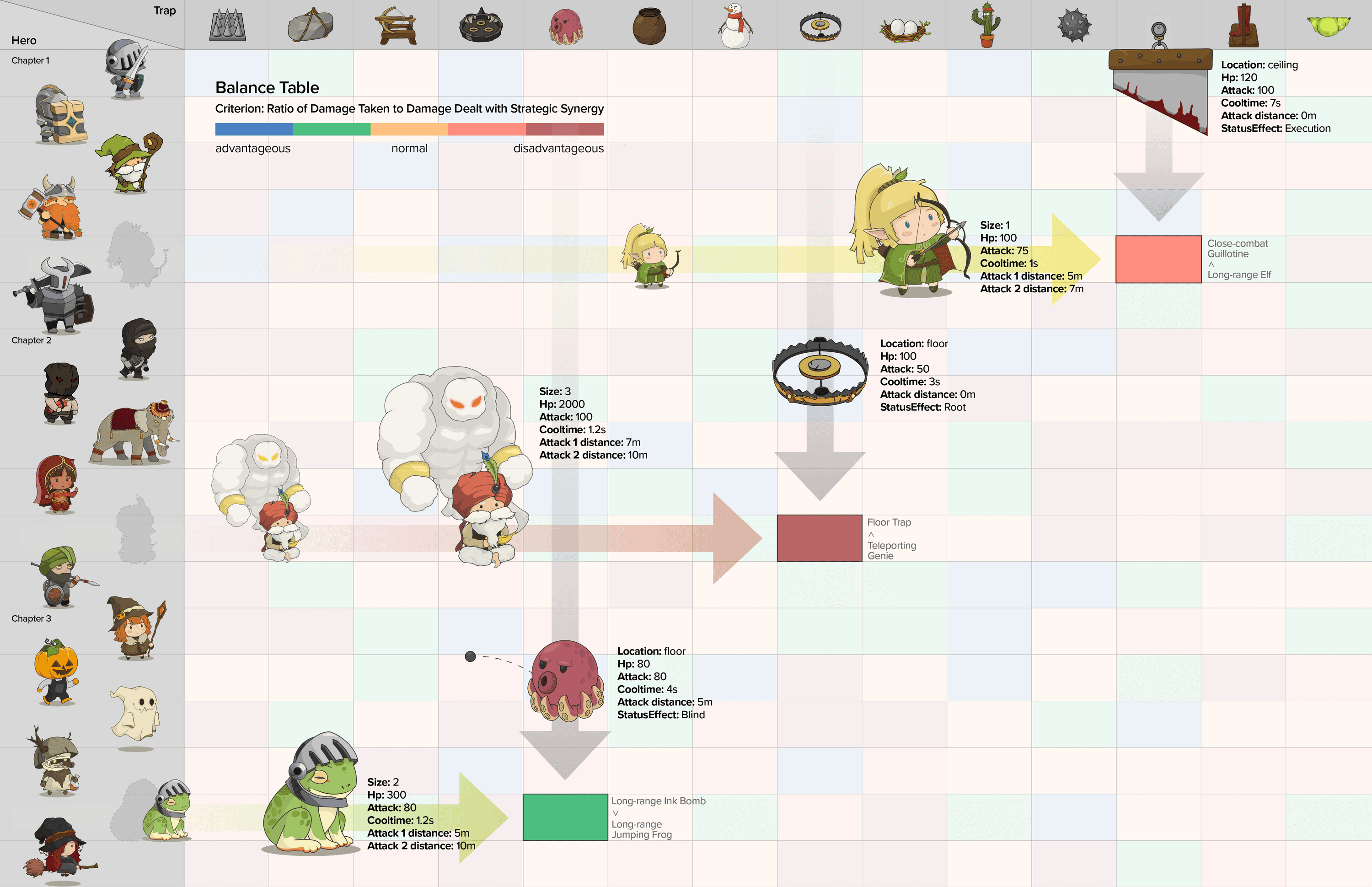
Each trap has unique properties, requiring players to strategically position them based on hero types. Factors such as range, ability, and placement create dynamic interactions—for example, elves can destroy ceiling traps but cannot attack floor traps. This system encourages players to diversify their strategy rather than relying on a single trap type.
ART
Character Design
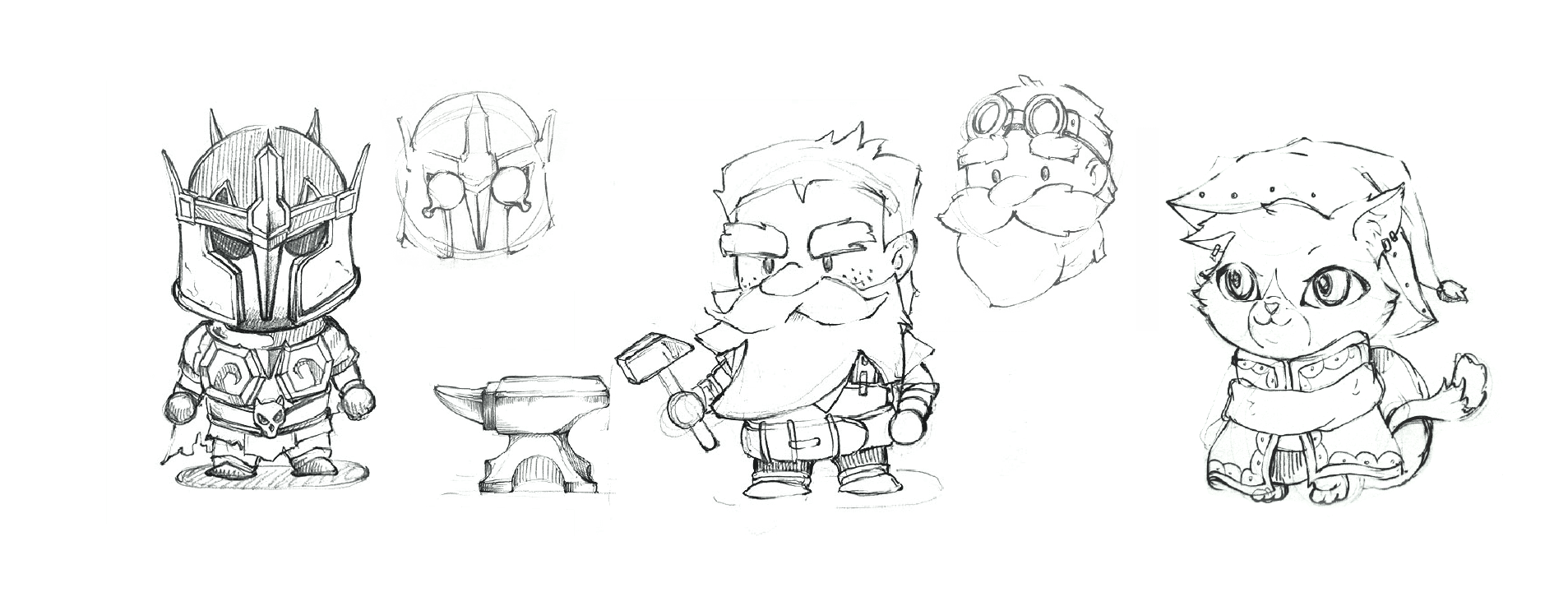
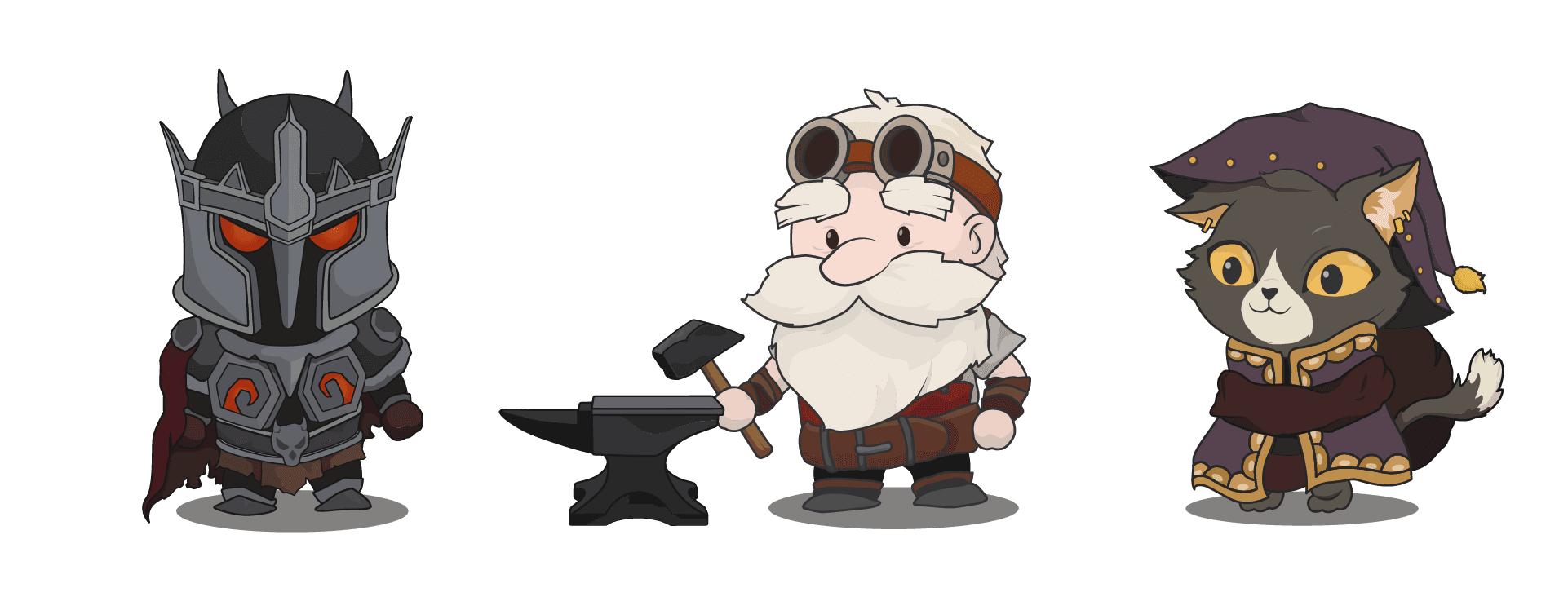
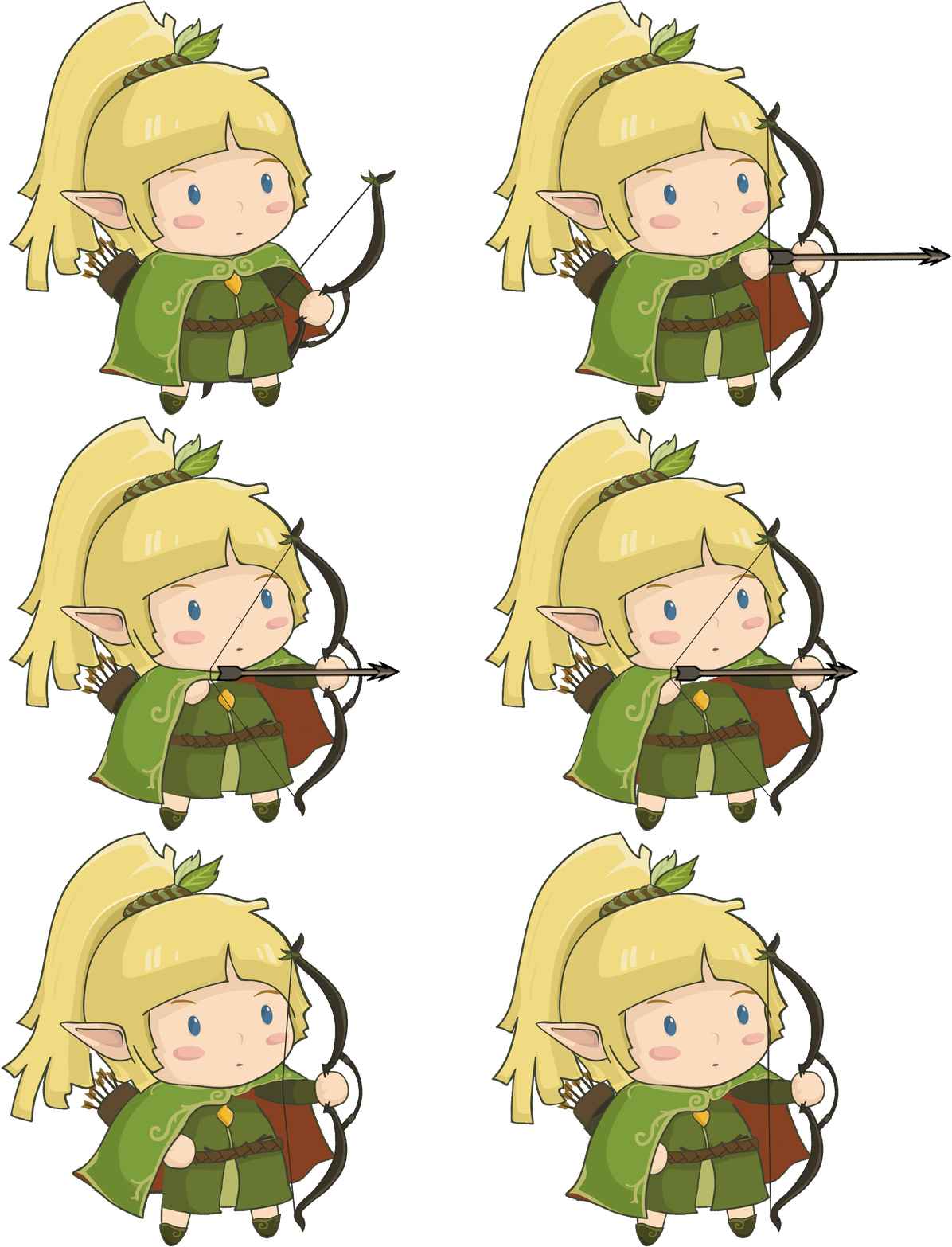
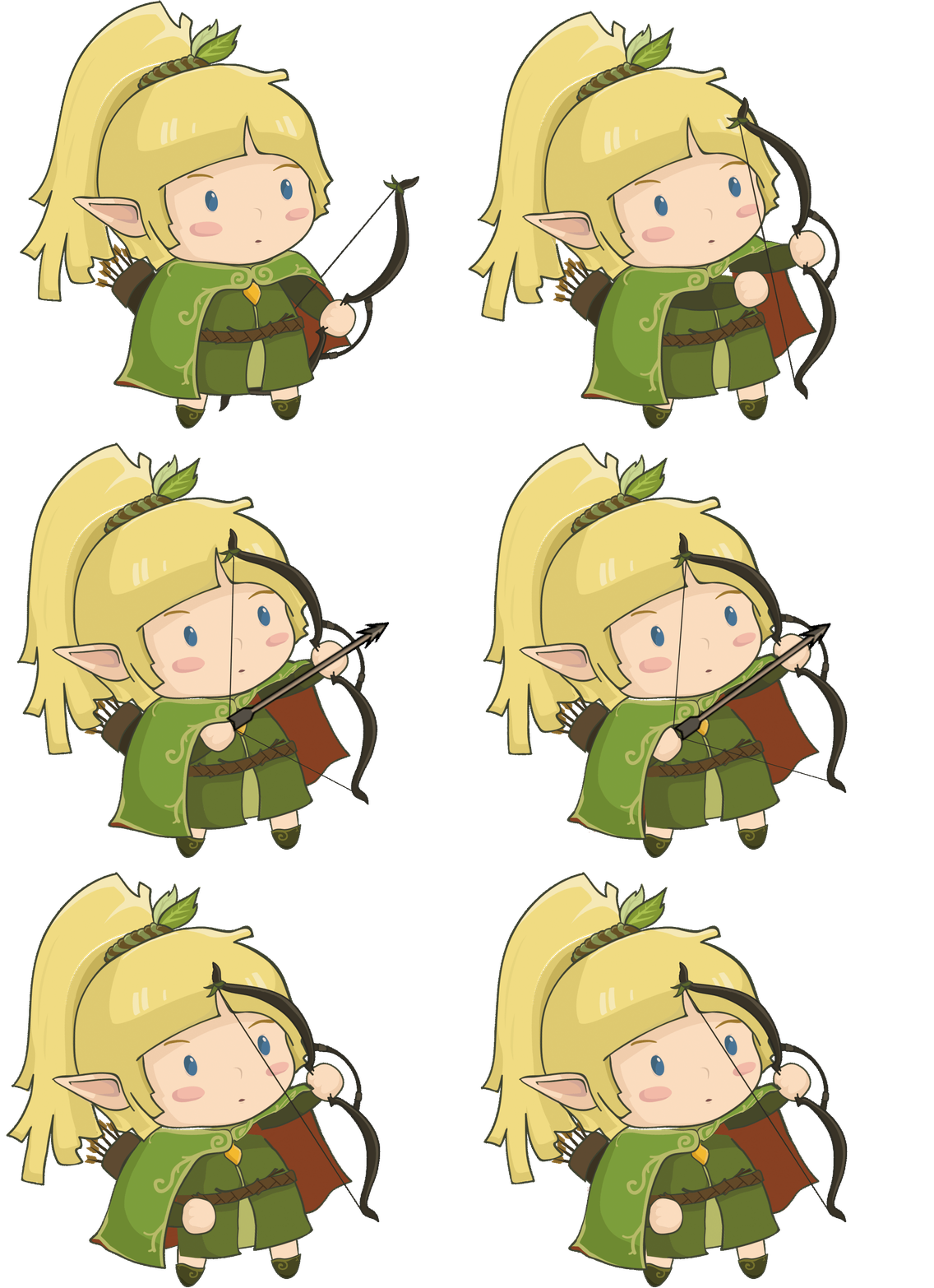
The main characters in the game consist of heroes with different concepts appearing in three chapters, and a blacksmith and a cat merchant who stand by the Demon King's side to assist him. Every hero has animations of 'walk, hurt, die, attack, and attack2.' Bosses in each chapter have about twice as many attack patterns and walking animations.

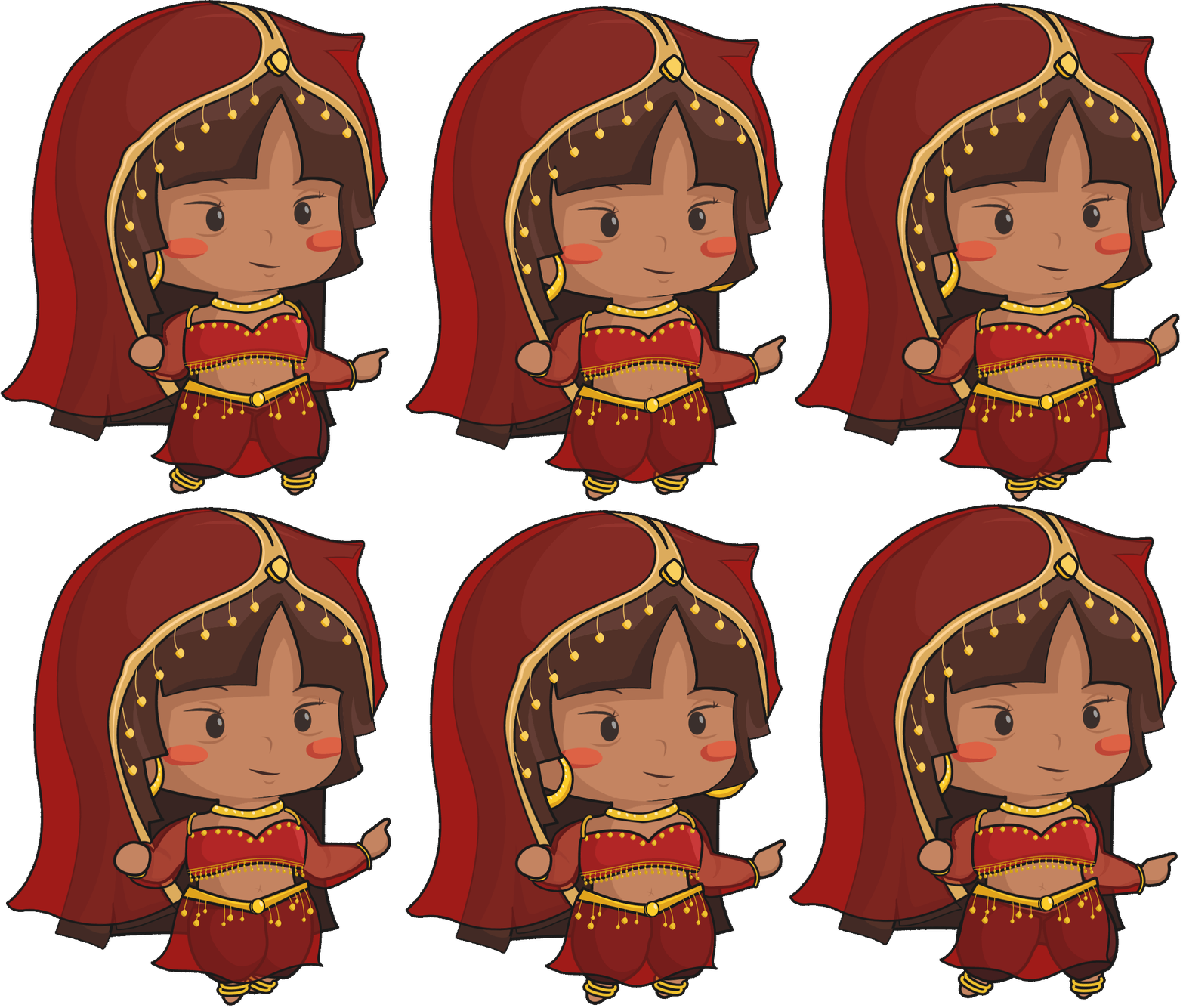
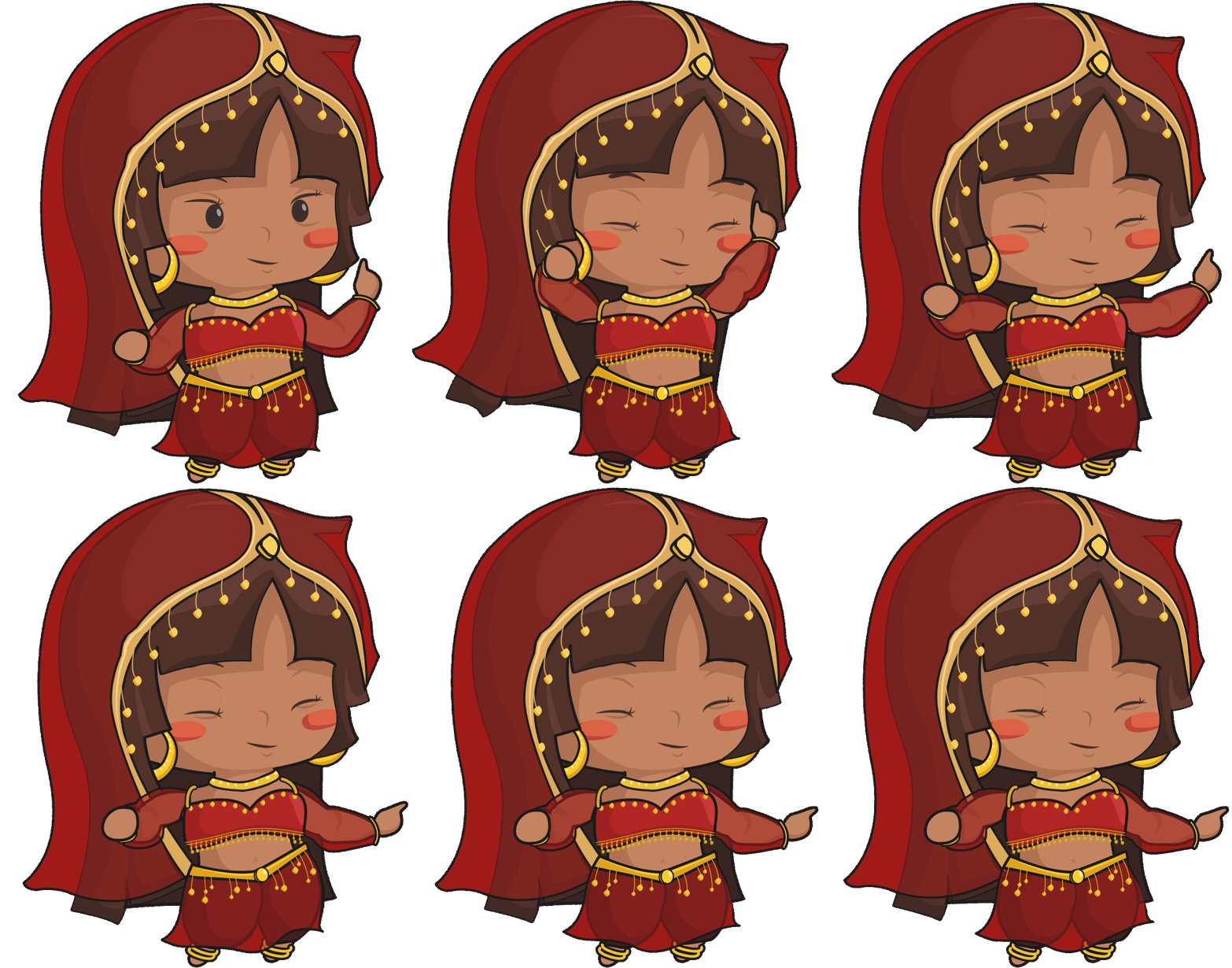
Animation with Spine
PLAYTESTING
Design Iteration
During Smilegate’s Open Beta Day, we conducted user testing to refine the gameplay experience. Several key insights emerged from player feedback, leading to significant design adjustments.

Video
Gameplay Video
REFLECTIONS
Takeaways
This was my first time creating a game, and it was truly a project of exploration, learning, and experimentation. Working alongside a developer and a sound designer, I experienced the thrill of seeing my ideas come to life. It was both exciting and deeply rewarding, a process that pushed me to think beyond just design and consider the full player experience.
What I Learned…
The importance of user feedback:
I assumed automated trap activation would feel intuitive, but player feedback revealed it made combat dull. This taught me the importance of closing the gap between design intent and actual user experience through iteration.
Designing UI for gameplay:
Game UI isn’t just about clarity. It must support player immersion and real-time decision-making. I learned to create intuitive, responsive UI that enhances gameplay without distraction.
Understanding game development:
From storytelling and mechanics to level design and art, I experienced the full game development process. Designing across multiple areas gave me a deeper understanding of how each element shapes the player experience.