Social Chair
An interactive installation that visualizes the relativity of
social comparison through shifting physical height.
TYPE
Interactive Art
TIMELINE
Sep 2022
TEAM
Seeun Park
Haesoo Oh
TOOLS
Arduino
Overview
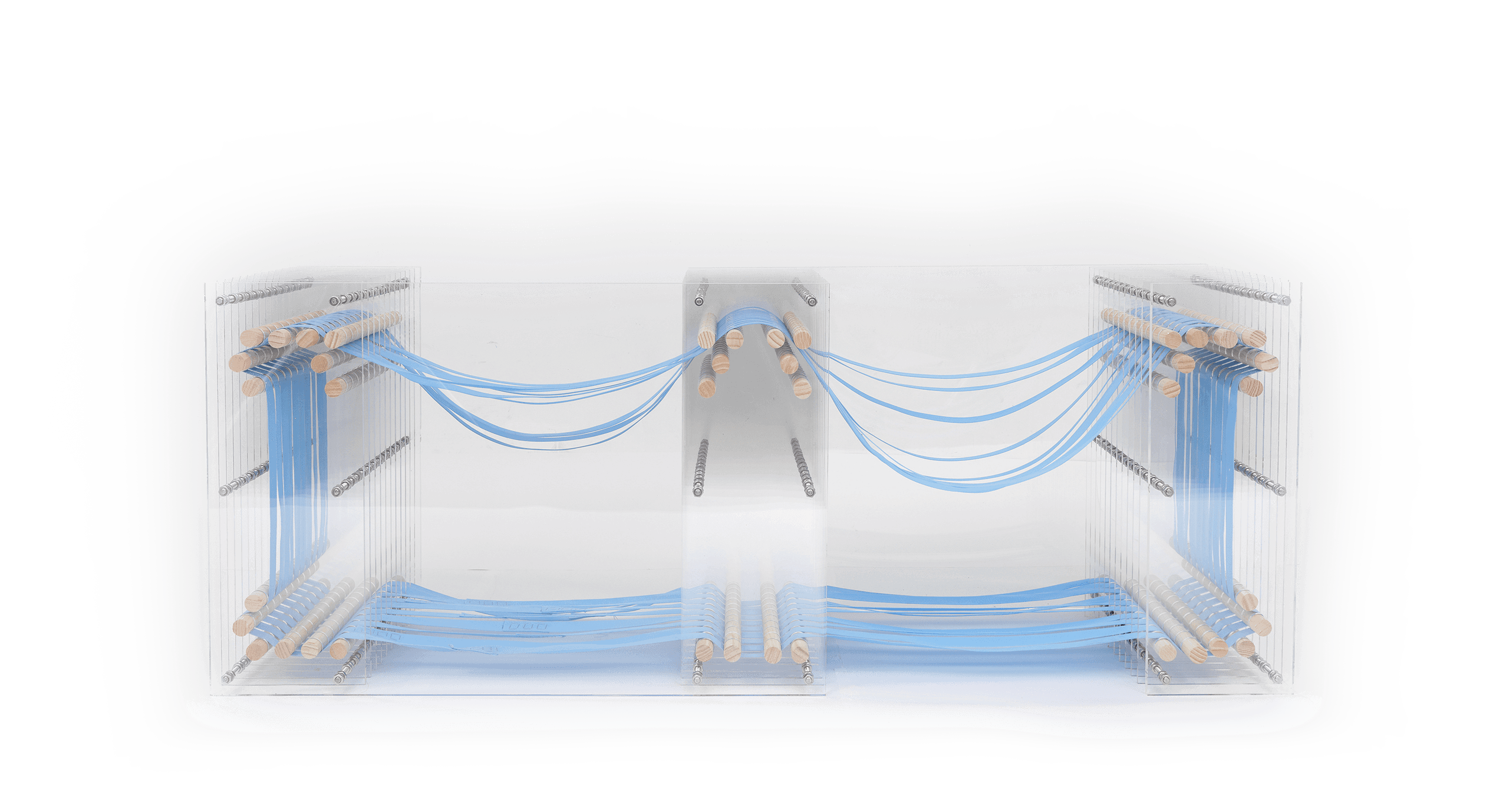
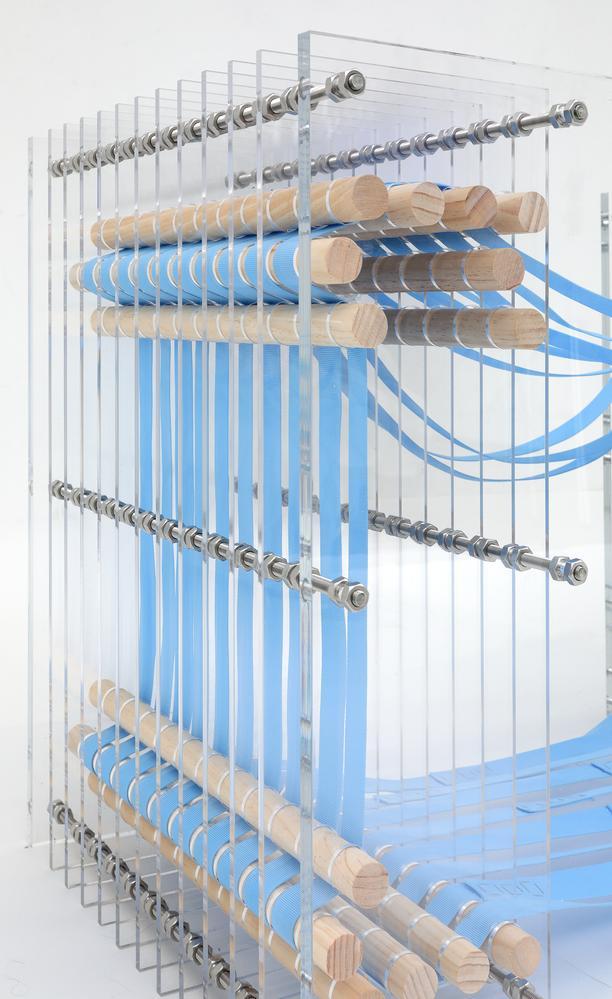
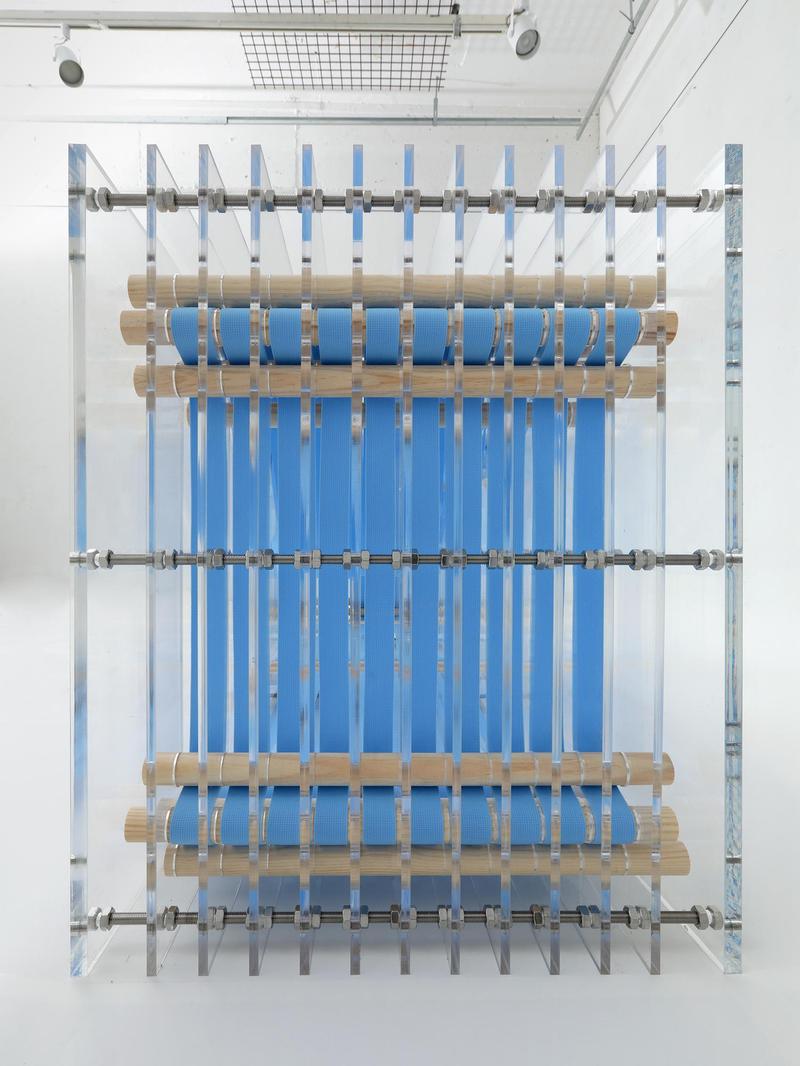
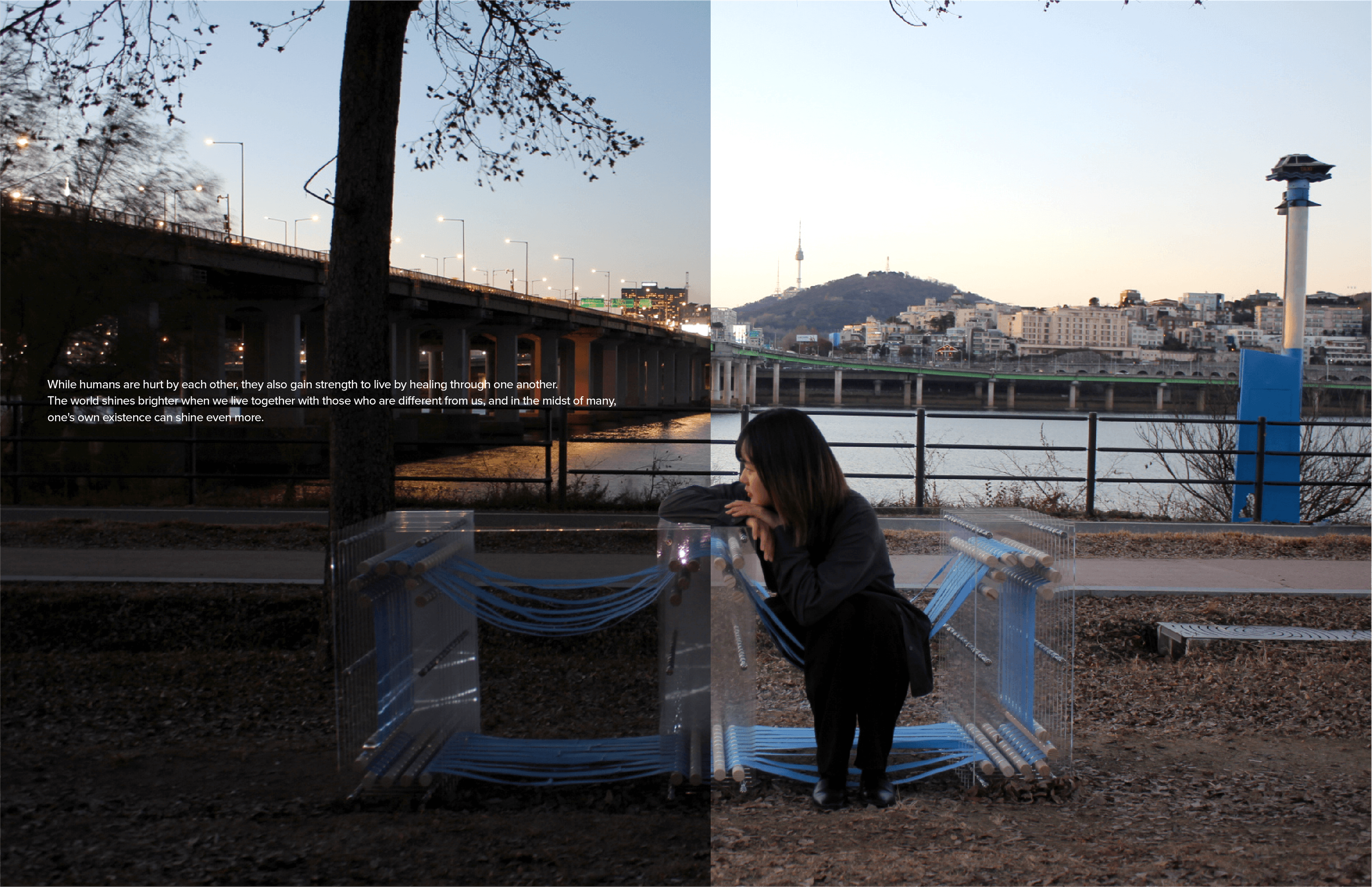
The Social Chair is an interactive installation that visualizes social comparison by altering its height in relation to nearby users. Participants cannot see who influences their position—only the shifting height—mirroring the invisible dynamics of comparison. When alone, the chair lowers uncomfortably, symbolizing the human need for connection and questioning how we measure self-worth against others.
CONCEPT
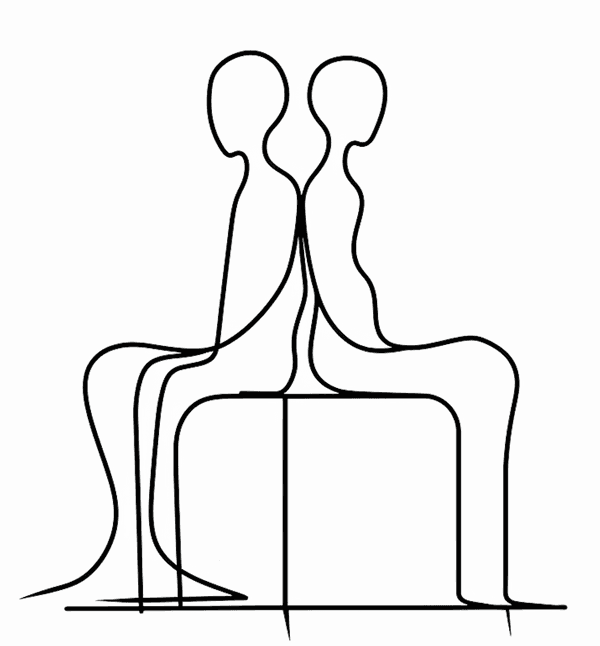
Inspired by the Harvard Study of Adult Development, which emphasizes the importance of relationships for long-term well-being, I began questioning: How does comparison affect our ability to connect? The Social Chair was designed as a response—an interactive object that embodies the fleeting and unstable nature of comparison while also highlighting the fundamental need for human connection.
FUNCTIONALITY
How it works
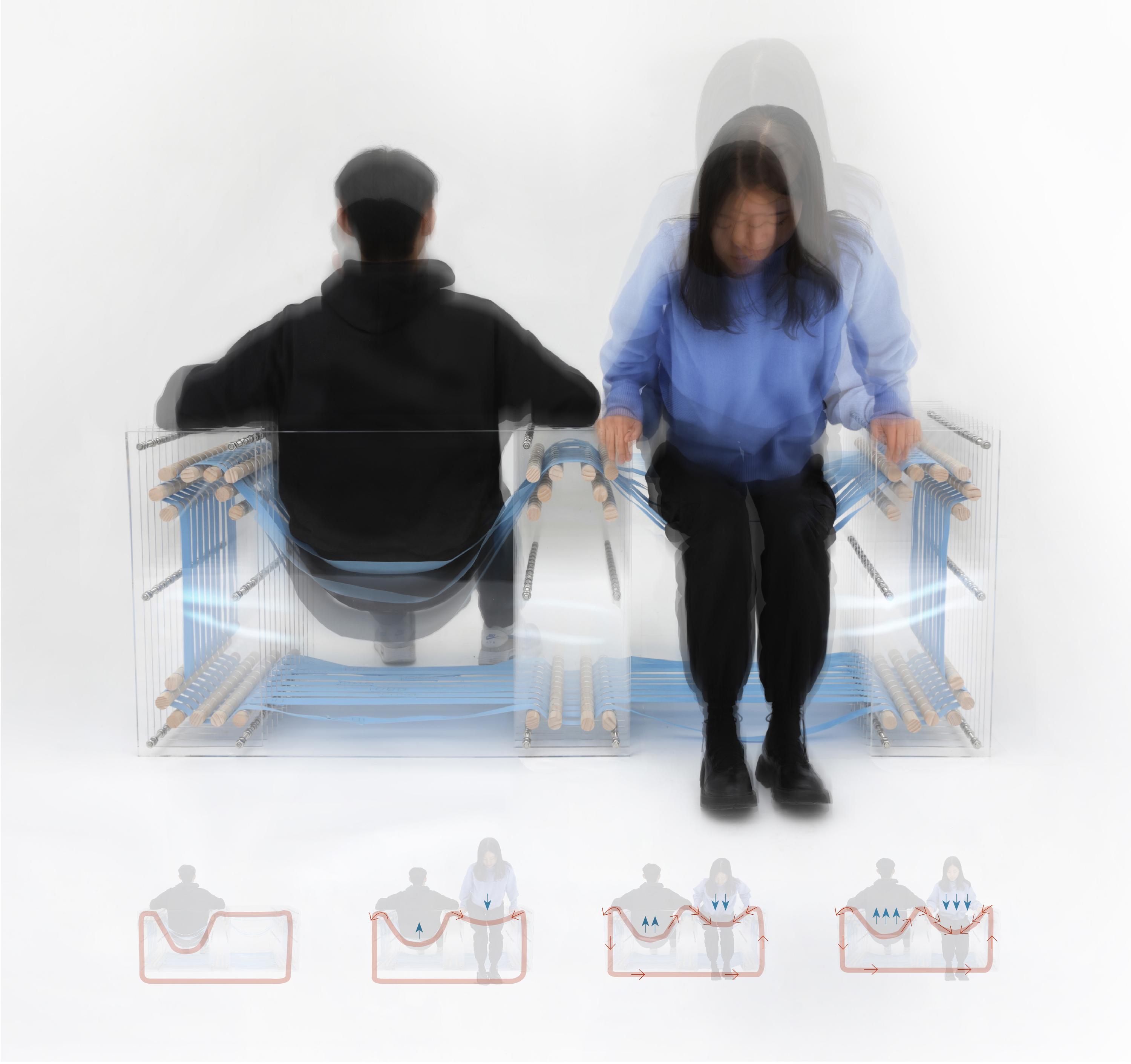
The Social Chair illustrates the relativity of social comparison through its dynamic height adjustment. The chair’s height shifts based on an unspecified number of nearby users. However, individuals cannot see who is influencing their position and only experience their own changing height.
This ever-shifting elevation highlights the subjective and often meaningless nature of comparison. When left alone, the chair sinks to an uncomfortable level, reinforcing the idea that as social beings, humans are not meant to exist in isolation, making comparison-driven unhappiness ultimately futile.
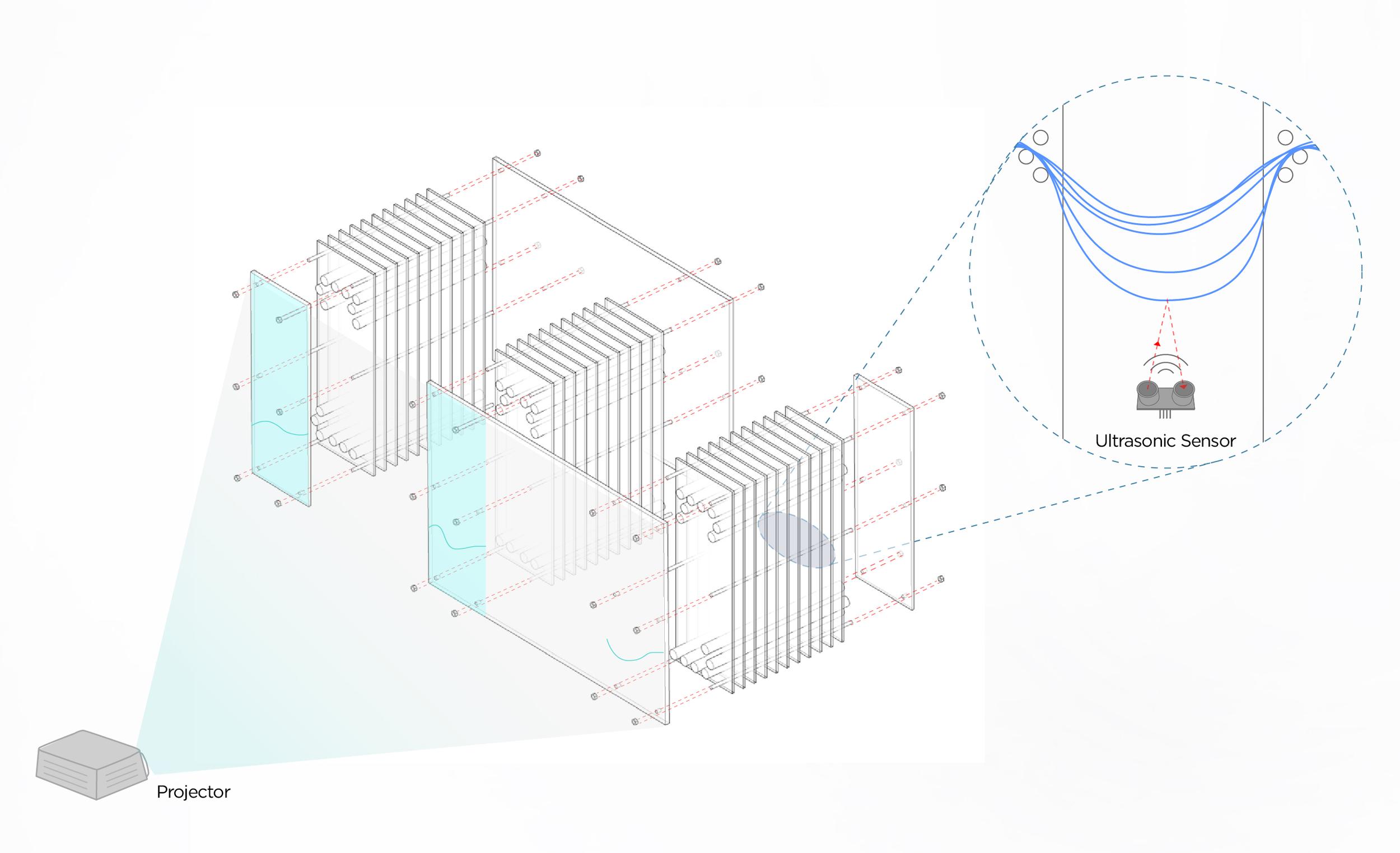
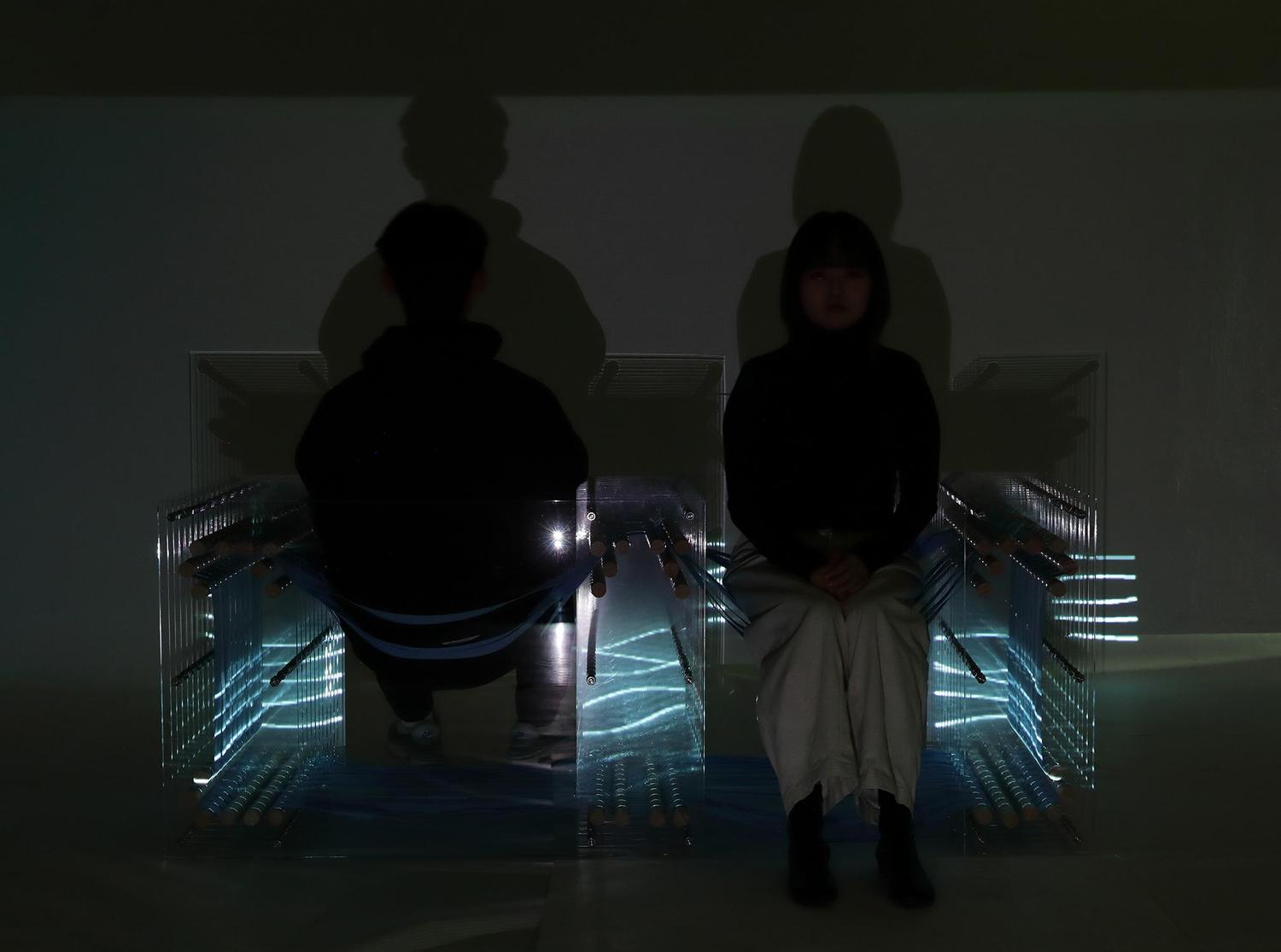
When a person sits on the chair, lines are drawn according to the sitting height and begin to move fluidly. By measuring the sinking height of each user with an ultrasonic sensor and using the animation software Aftereffect, we created and animated an indicator projected onto the chair surface.
It is displayed as waving lines which make the initially drawn heights meaningless as they are mixing altogether.
REFLECTIONS
Takeaways
This project enhanced my understanding of how physical interaction can transform abstract social dynamics into tangible experiences. Designing a chair that reacts to unseen influences allowed me to explore how comparison shapes self-perception, reinforcing the role of interaction design in fostering awareness and reflection on human behavior.
What I Learned…
Balancing concept, function, and user experience:
Creating an interactive furniture piece required seamlessly integrating aesthetics, mechanics, and user experience. The challenge was ensuring that the chair’s movement felt organic and intuitive while maintaining its symbolic depth. This process strengthened my ability to design for both physical interaction and conceptual storytelling, bridging functionality with meaning.