How can design make
responsible behavior irresistible?

A gamified app that turns waste disposal into a playful interaction.
Trash Monsters

Trash Monsters

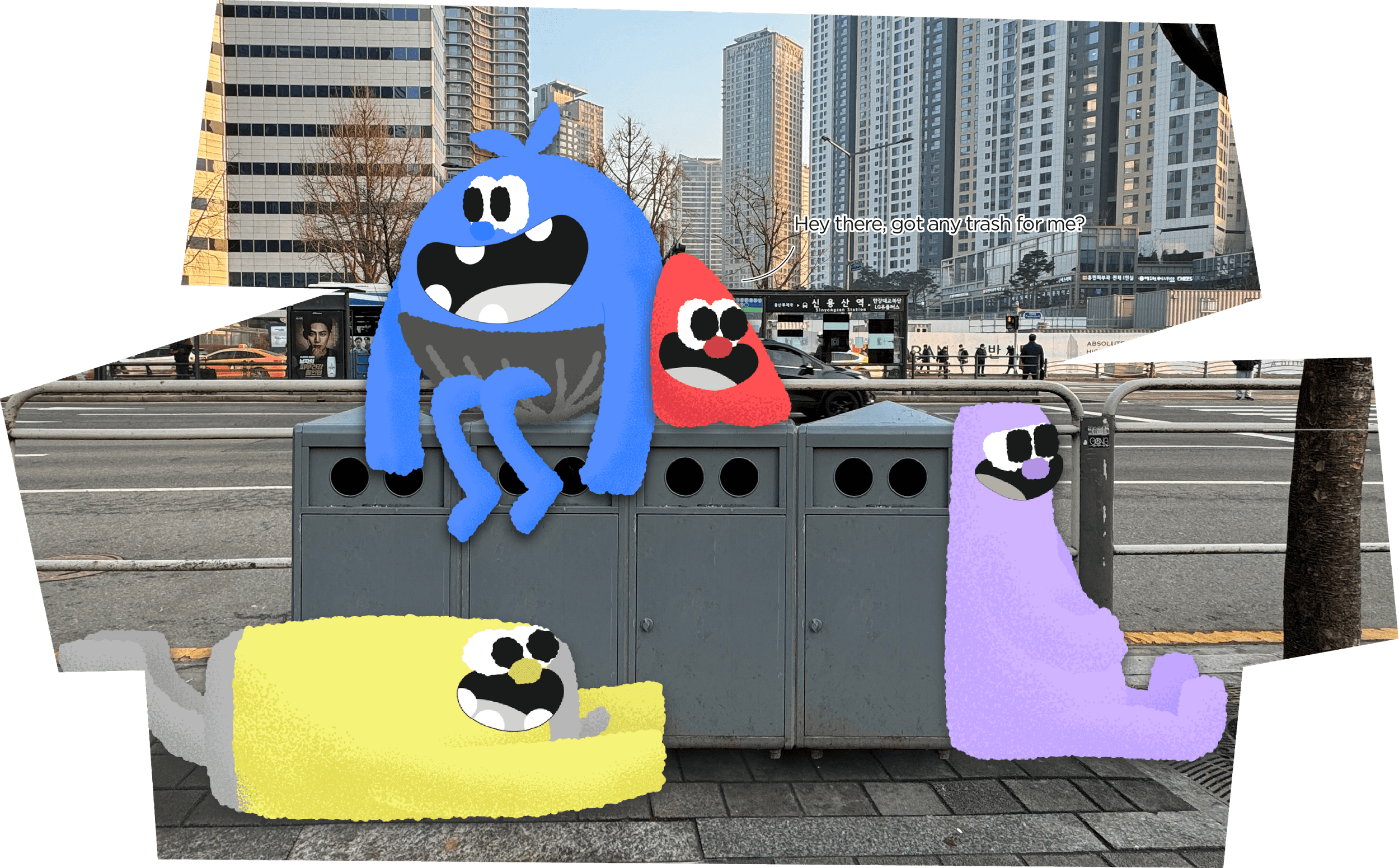
Trash Monsters is a gamified app that reduces littering by turning trash bins into playful characters. Users “feed” their waste to Trash Monsters, reframing disposal as a rewarding interaction rather than an obligation.

Trash Monsters is a gamified app that reduces littering by turning trash bins into playful characters. Users “feed” their waste to Trash Monsters, reframing disposal as a rewarding interaction rather than an obligation.

services

services

UX Case Study
Campaign

UX Case Study
Campaign

timeline

timeline

Dec 2022

Dec 2022

team

team

Personal Project

Personal Project

tools

tools

Adobe CS
Figma
Spine

Adobe CS
Figma
Spine

Background

Walking through the streets of Seoul, I frequently noticed piles of litter accumulating in areas without visible trash bins.

The lack of proper disposal points, combined with the inconvenience of carrying trash, often led people to dump their waste irresponsibly. Rather than just pointing out where bins are located, I wanted to motivate action by turning the act of waste disposal into something people would actively want to do.
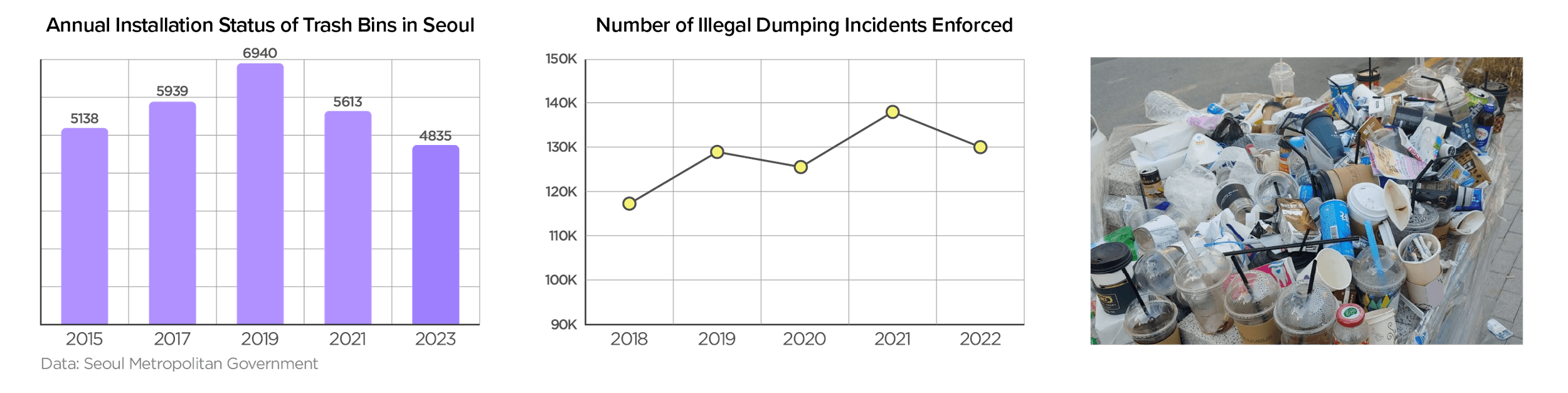
Seoul has only about 8 trash bins per square kilometer, a significantly lower number compared to other major cities. In contrast, Melbourne, Australia, had 80 bins per square kilometer in 2020, while New York, USA, had 29 in the same year. This scarcity makes it difficult for citizens to find disposal points, and the lack of awareness regarding bin locations further contributes to littering on sidewalks.

Problem statement

How might we encourage responsible waste disposal in urban environments
by making the process more engaging and accessible?

QUANTITATIVE RESEARCH
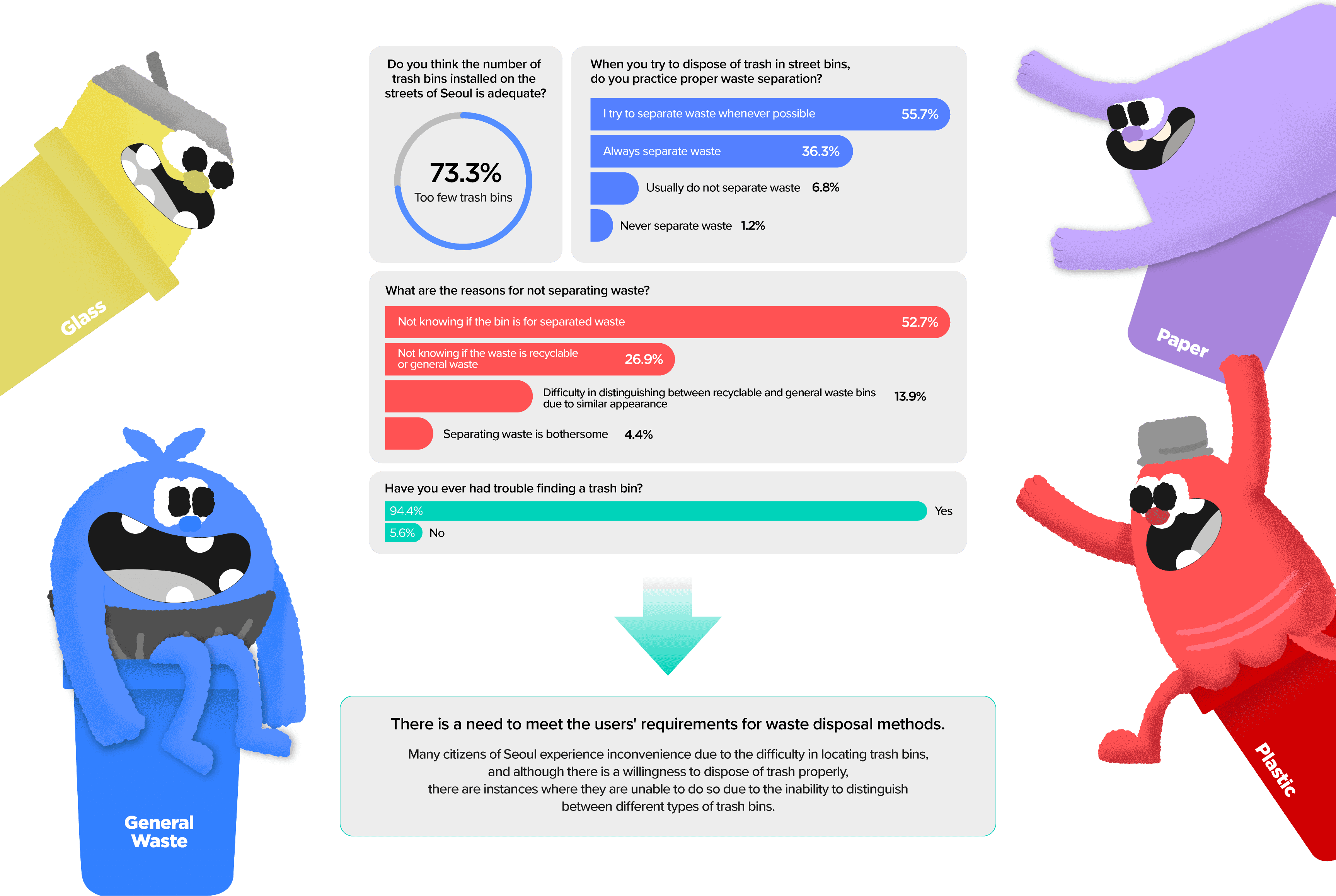
I analyzed data from the 2021 Seoul Administrative
Service Satisfaction Survey (n=3,112).

I analyzed data from the 2021 Seoul Administrative
Service Satisfaction Survey (n=3,112).

I analyzed data from the 2021 Seoul Administrative
Service Satisfaction Survey (n=3,112).

QUALITATIVE RESEARCH

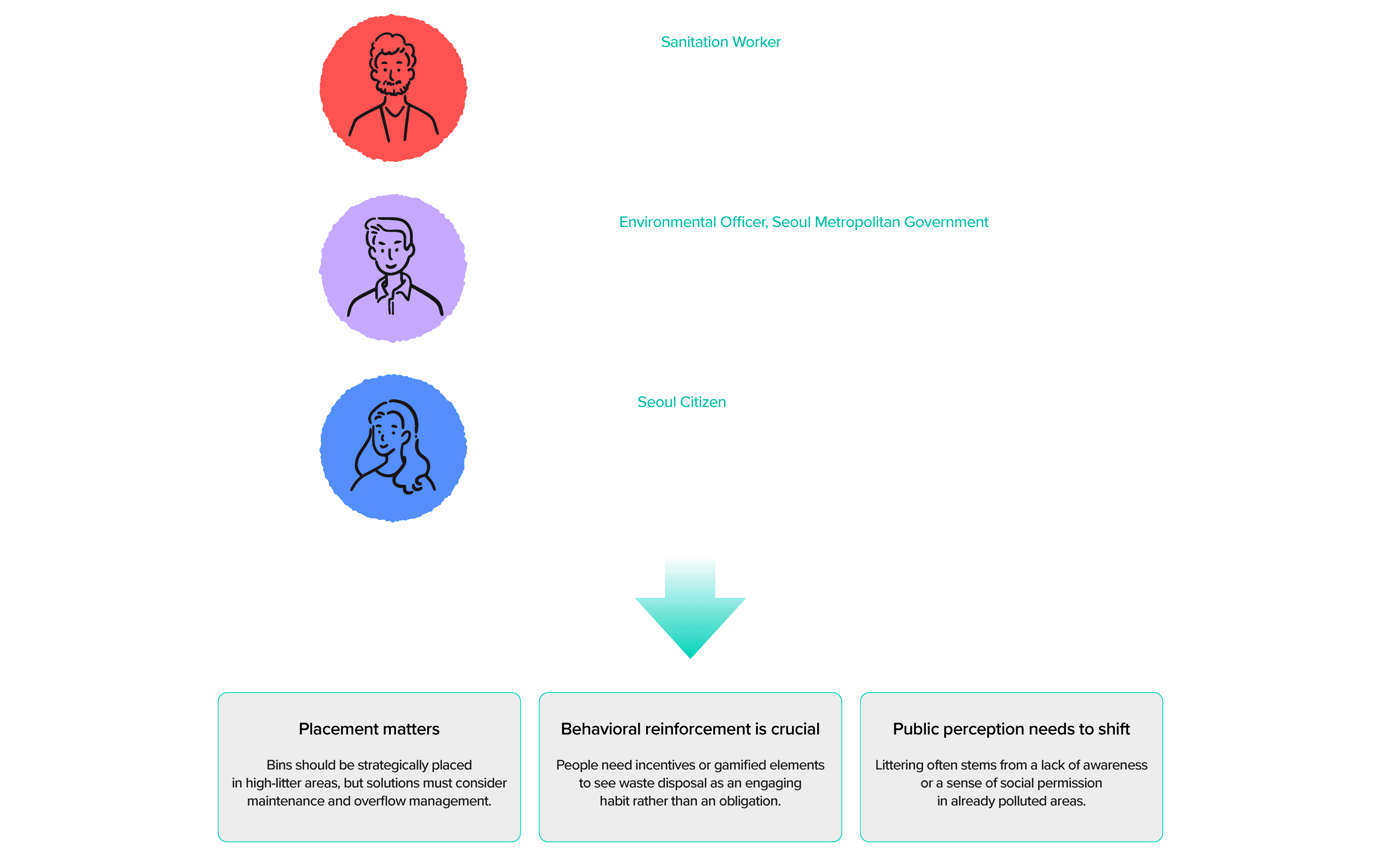
To explore the issue from multiple perspectives,
I conducted in-person interviews with
sanitation worker, government official, general citizen.

To explore the issue from multiple perspectives,
I conducted in-person interviews with
sanitation worker, government official, general citizen.

To explore the issue from multiple perspectives,
I conducted in-person interviews with
sanitation worker, government official, general citizen.

SYNTHESIS

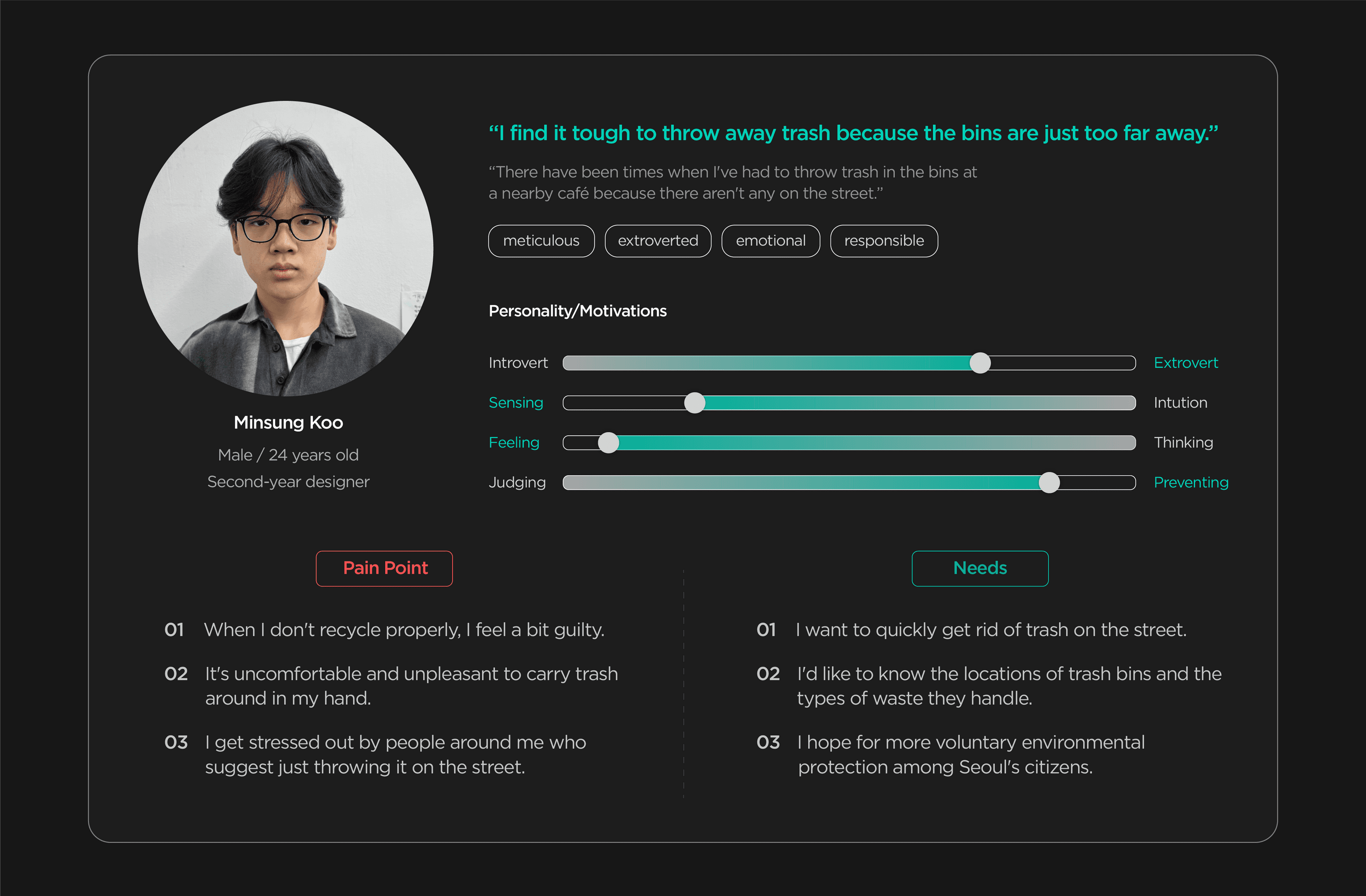
Based on interview research, I developed this user persona.

Based on interview research, I developed this user persona.

SYNTHESIS

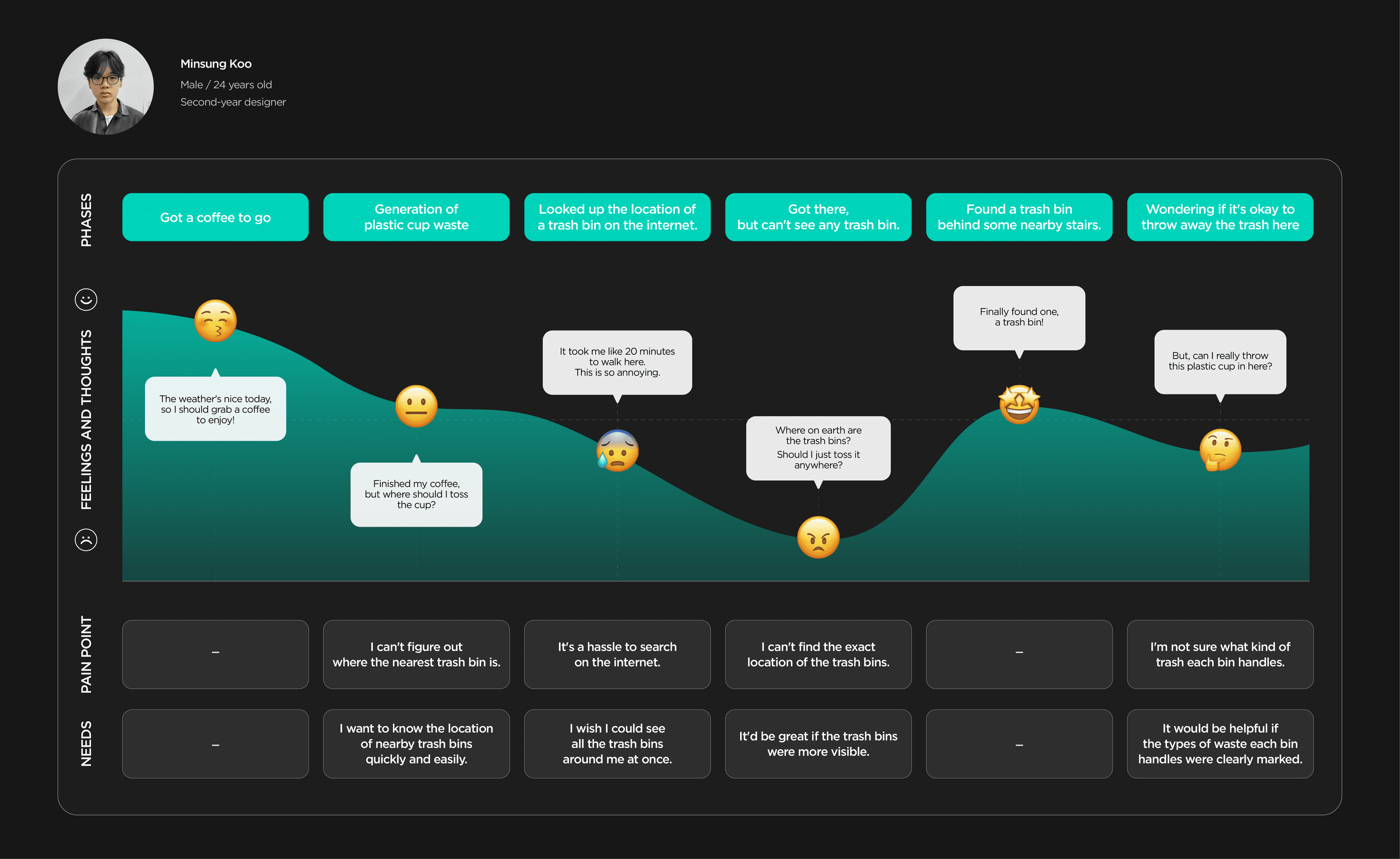
So I mapped what actually happens in real life.

So I mapped what actually happens in real life.

SYNTHESIS

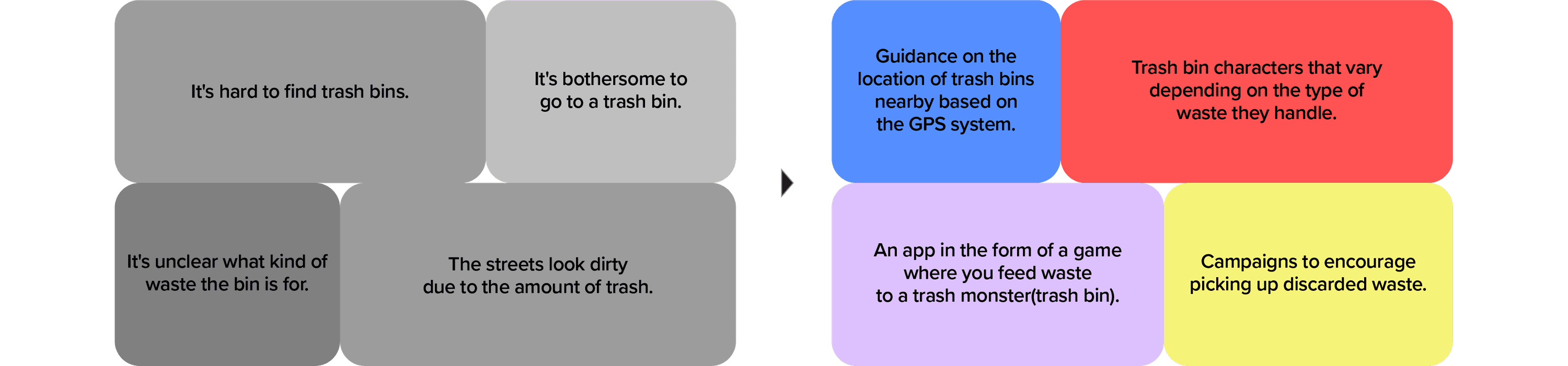
So, what’s the real problem and how might we fix it?

So, what’s the real problem and how might we fix it?

Finding nearby trash bins alone isn’t enough. Simply showing their locations assumes people are willing to go out of their way to dispose of waste. But one of the main reasons people litter is inconvenience.

So instead of treating disposal as a chore, what if we made it something people actually enjoy?
By combining real-time bin guidance with playful game elements, the experience shifts from obligation to engagement, encouraging users to walk a little farther and dispose of their trash responsibly.

Finding nearby trash bins alone isn’t enough. Simply showing their locations assumes people are willing to go out of their way to dispose of waste. But one of the main reasons people litter is inconvenience.

So instead of treating disposal as a chore, what if we made it something people actually enjoy?
By combining real-time bin guidance with playful game elements, the experience shifts from obligation to engagement, encouraging users to walk a little farther and dispose of their trash responsibly.

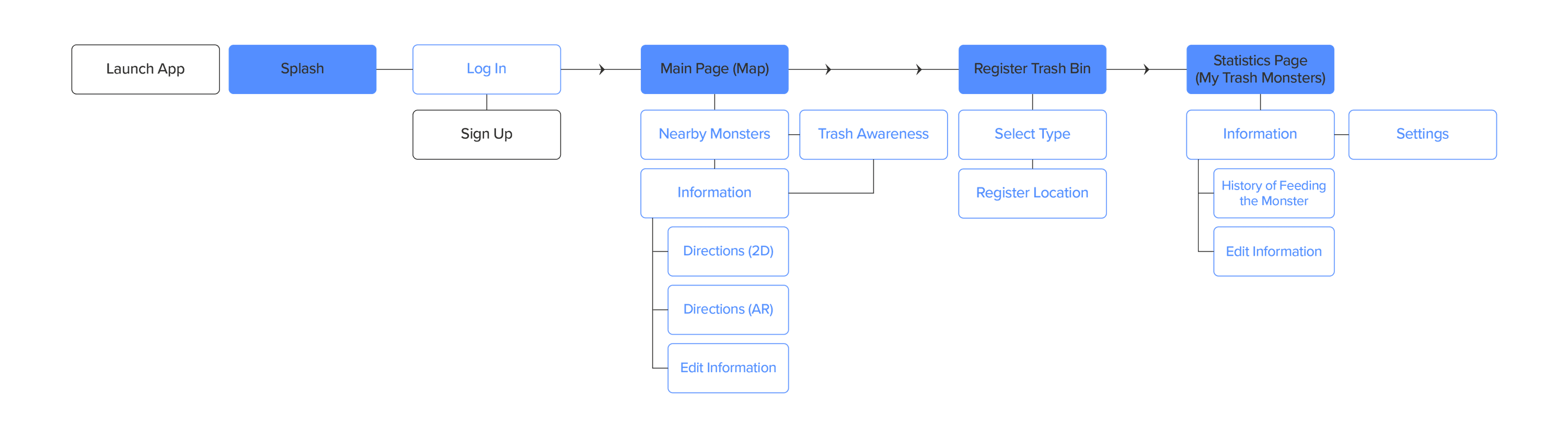
Work Flow

How the experience comes together

How the experience comes together

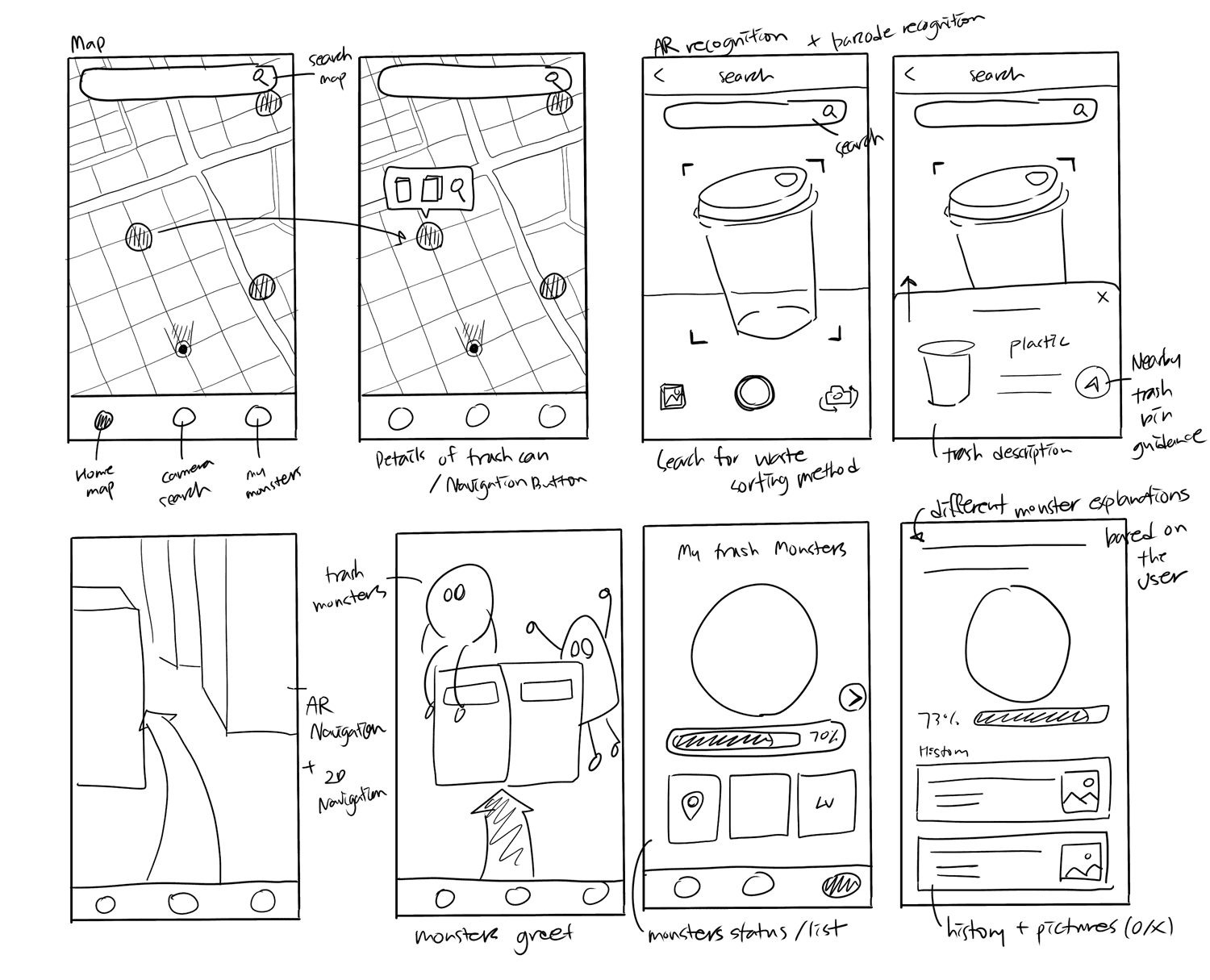
Low-Fi Prototype

Sketching the experience before building it

Sketching the experience before building it

Final Design

Key features

Key features

GPS-Based Trash Monster Navigation

GPS-Based Trash Monster Navigation

Trash Bin Location Provided By: Seoul Metropolitan Government

Trash Bin Location Provided By: Seoul Metropolitan Government

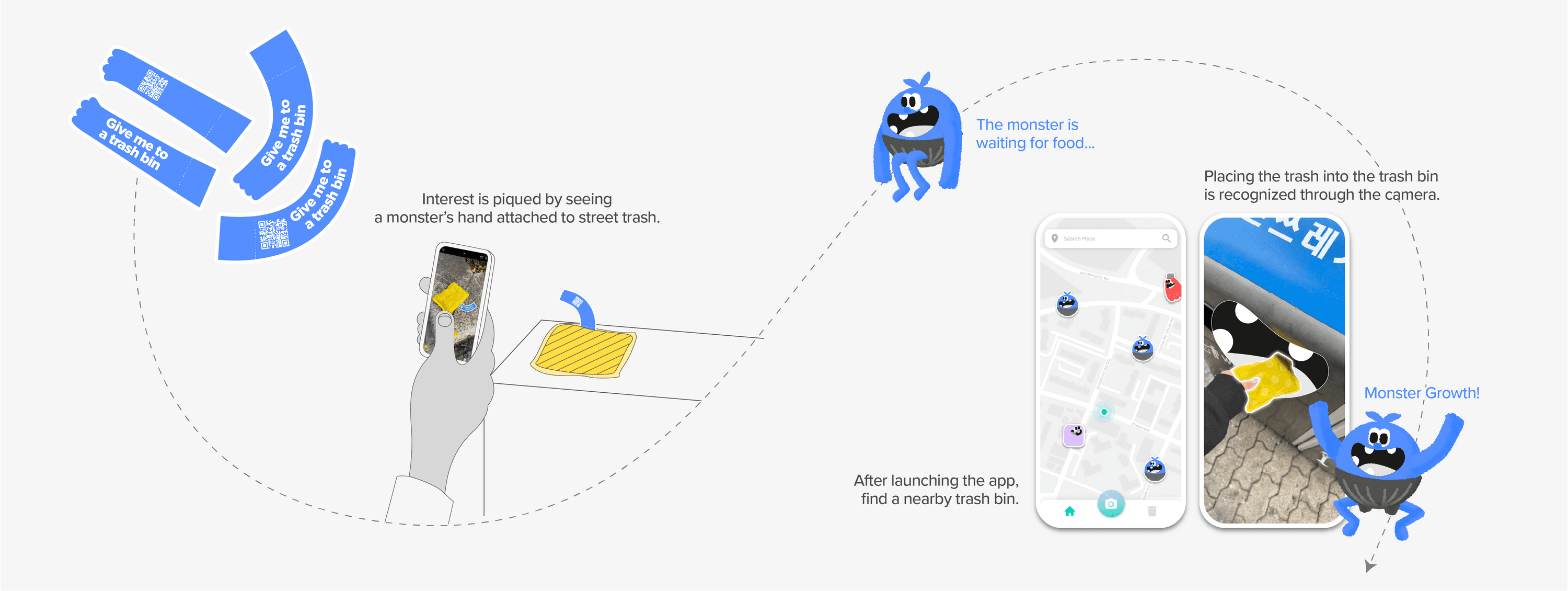
Using GPS, the app displays Trash Monsters around the user on the main screen. When a user touches a Trash Monster, navigation activates to guide them to the nearest trash bin.
Each bin awaits with an eager Trash Monster, and when the app recognizes that trash has been deposited in the bin, the corresponding monster grows.

Using GPS, the app displays Trash Monsters around the user on the main screen. When a user touches a Trash Monster, navigation activates to guide them to the nearest trash bin.
Each bin awaits with an eager Trash Monster, and when the app recognizes that trash has been deposited in the bin, the corresponding monster grows.

AR-Enhanced Trash Monster Navigation

AR-Enhanced Trash Monster Navigation

With AR guidance, users can see Trash Monsters appear in the real world, waiting at designated bins. As they follow the path, the monster becomes more animated, reacting when trash is successfully disposed of, making waste disposal more engaging and rewarding.

With AR guidance, users can see Trash Monsters appear in the real world, waiting at designated bins. As they follow the path, the monster becomes more animated, reacting when trash is successfully disposed of, making waste disposal more engaging and rewarding.

My Trash Monsters:
Tracking Waste Disposal Progress

My Trash Monsters:
Tracking Waste Disposal Progress

In the My Trash Monsters screen, users track their waste disposal progress as monsters grow based on their habits. The app highlights their most developed monster, making waste disposal engaging, rewarding, and fun.

In the My Trash Monsters screen, users track their waste disposal progress as monsters grow based on their habits. The app highlights their most developed monster, making waste disposal engaging, rewarding, and fun.

Smart Waste Sorting & Bin Locator

Smart Waste Sorting & Bin Locator

Users can scan an item to identify its material and receive disposal instructions. The app provides clear recycling guidelines and directs users to the nearest appropriate trash bin, making waste sorting effortless and accessible.

Users can scan an item to identify its material and receive disposal instructions. The app provides clear recycling guidelines and directs users to the nearest appropriate trash bin, making waste sorting effortless and accessible.

Final Design

Campaign

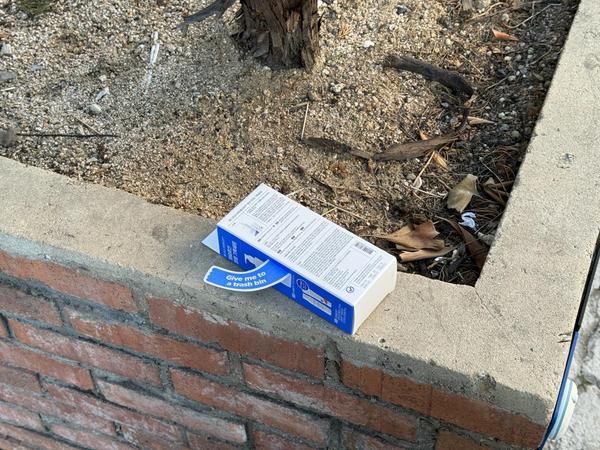
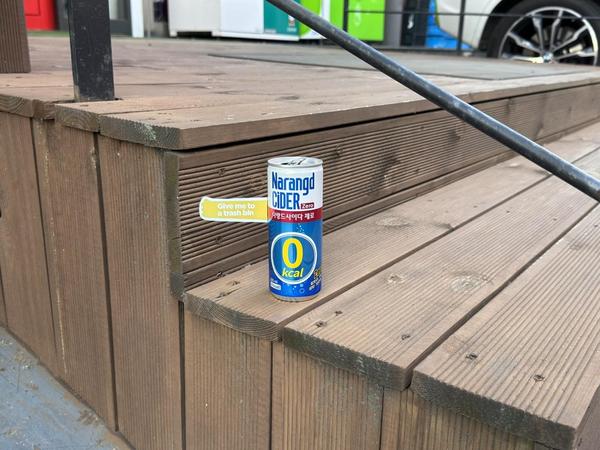
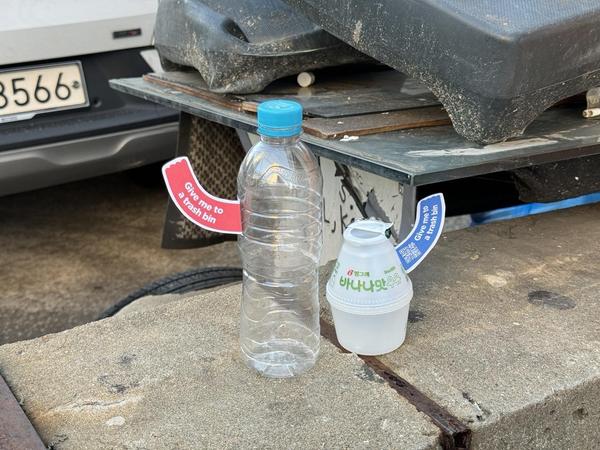
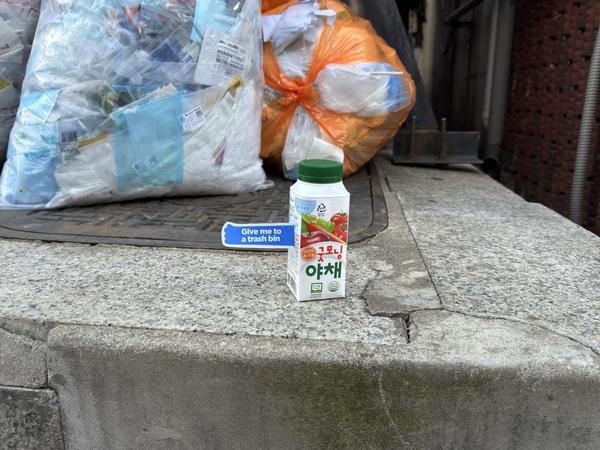
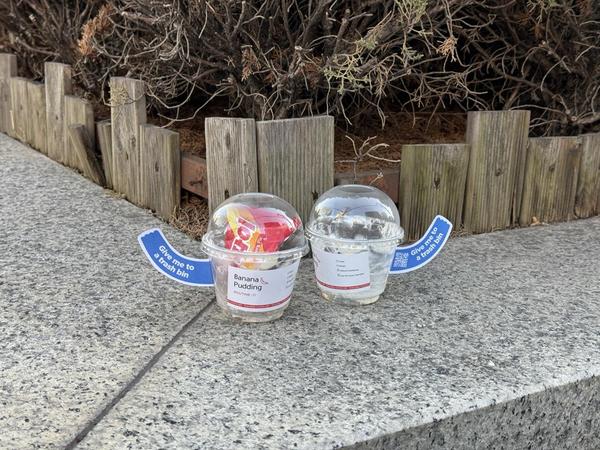
To spark interest, trash found on the streets will have a label saying ‘Give me to a trash bin’
and an arm of the Trash Monster attached to it, encouraging people to pick up and properly dispose of street litter.
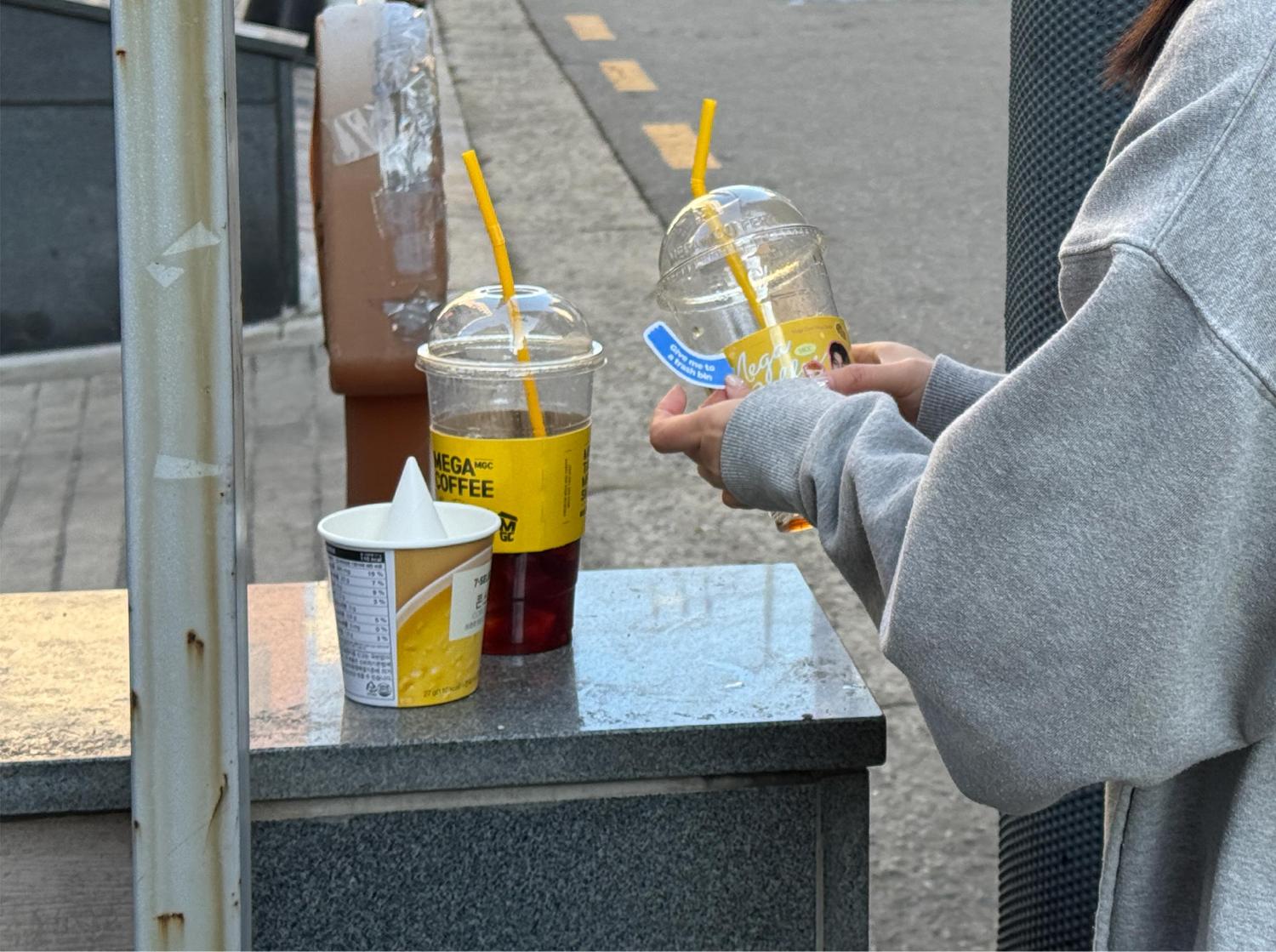
The campaign aims to observe changes in attitudes toward picking up and properly disposing of street litter.
It also assesses the environmental impact of these actions while collecting valuable data and insights to inform future conservation efforts.

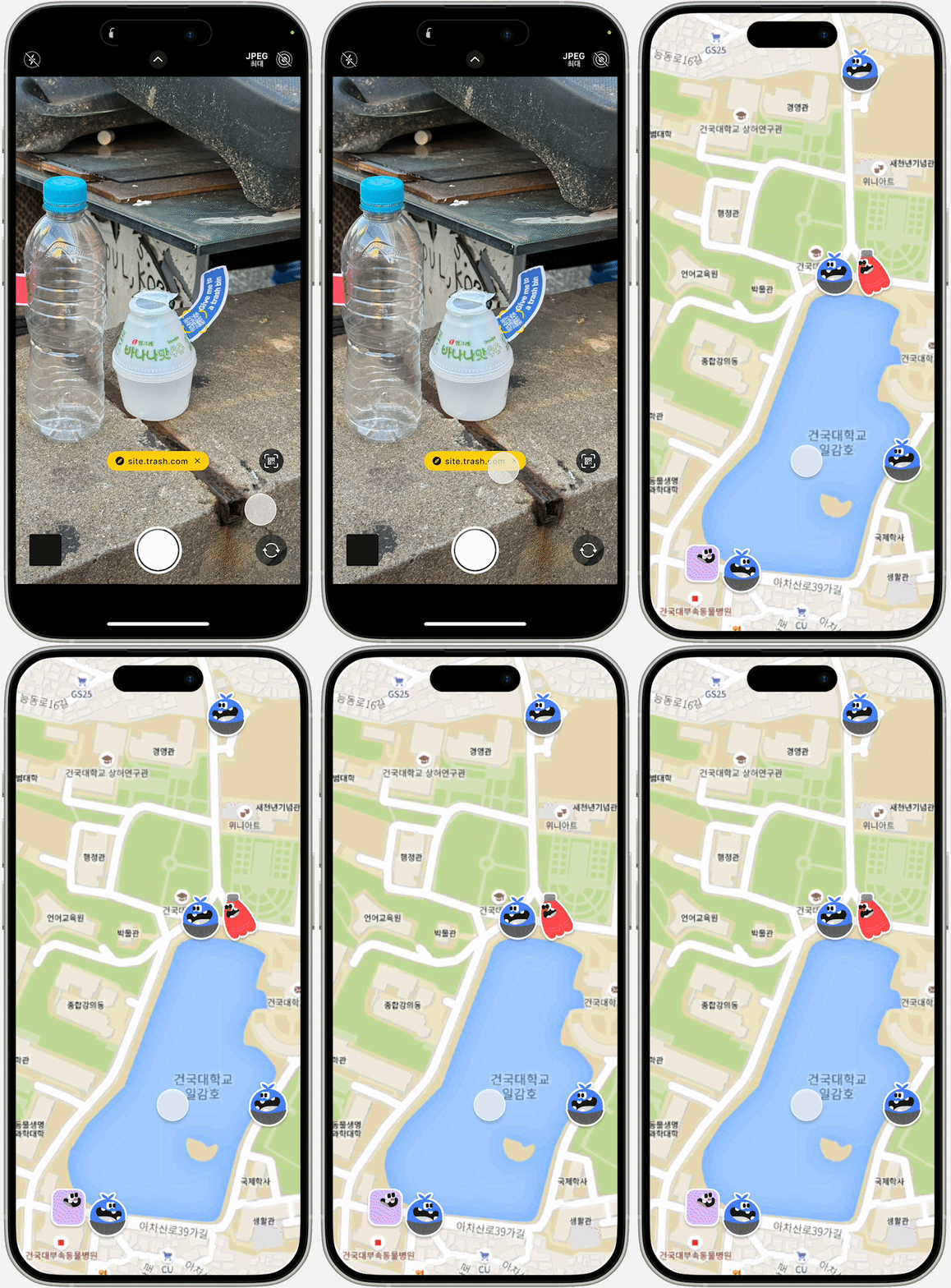
My approach involved attaching stickers with the message ‘Give me to a trash bin’ to trash found on the streets.
This initiative started experimentally within Konkuk university campus,
with the primary goal of encouraging people to pick up the stickered trash and dispose of it in trash bins.

When people scan the QR code attached to the trash,
a temporary map of trash bins within the campus is displayed.

Impact

What I saw on campus..

What I saw on campus..

To spark interest, trash found on the streets will have a label saying ‘Give me to a trash bin’
and an arm of the Trash Monster attached to it, encouraging people to pick up and properly dispose of street litter.
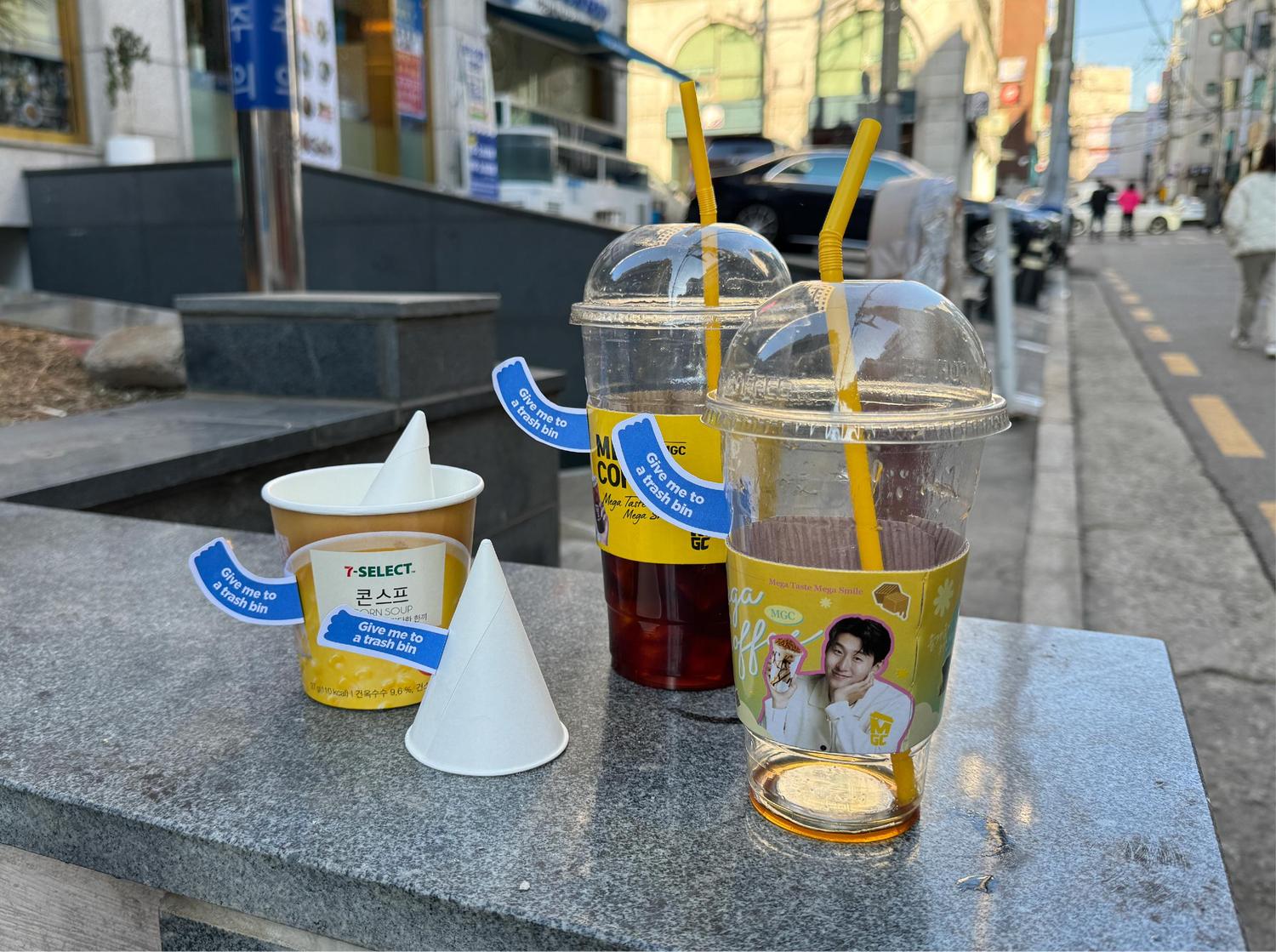
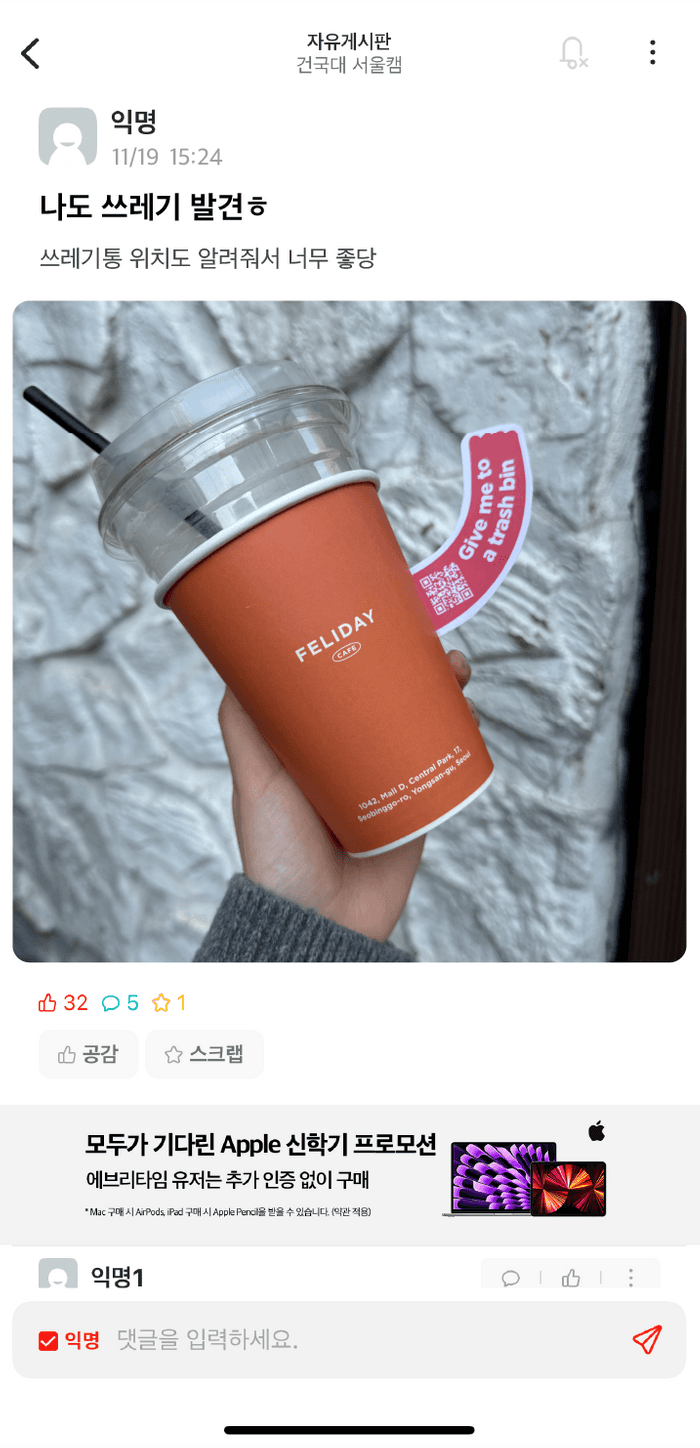
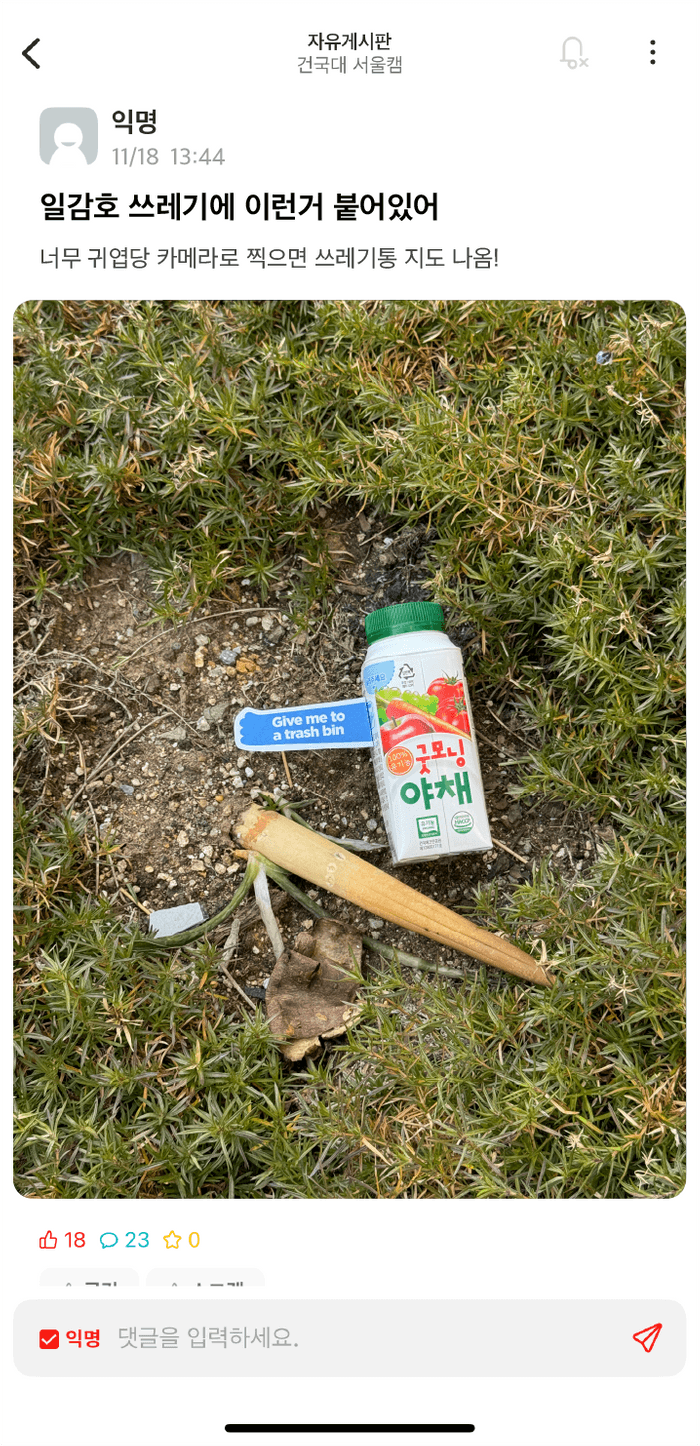
After launching the campaign, it quickly gained attention within the university community. Photos of litter with the stickers began circulating online, sparking conversations and encouraging students to rethink their behavior.

Within just a few days, I noticed a visible decrease in litter on campus. More importantly, students started expressing their willingness to pick up and properly dispose of trash when they encountered it. It wasn’t just about cleaner streets—it felt like a shift in awareness.

After launching the campaign, it quickly gained attention within the university community. Photos of litter with the stickers began circulating online, sparking conversations and encouraging students to rethink their behavior.

Within just a few days, I noticed a visible decrease in litter on campus. More importantly, students started expressing their willingness to pick up and properly dispose of trash when they encountered it. It wasn’t just about cleaner streets—it felt like a shift in awareness.

REFLECTIONS

Takeaways

While the app was not fully developed, the campaign revealed the power of gamification in influencing real-world behavior. It also highlighted the importance of user testing and iteration to ensure that engaging concepts translate into effective, impactful interactions.