Then something unexpected happened.
The CEO of Commit to Green reached out after seeing the project and asked:
What if this could become a real product?
That question became the starting point of Binly
The Problem
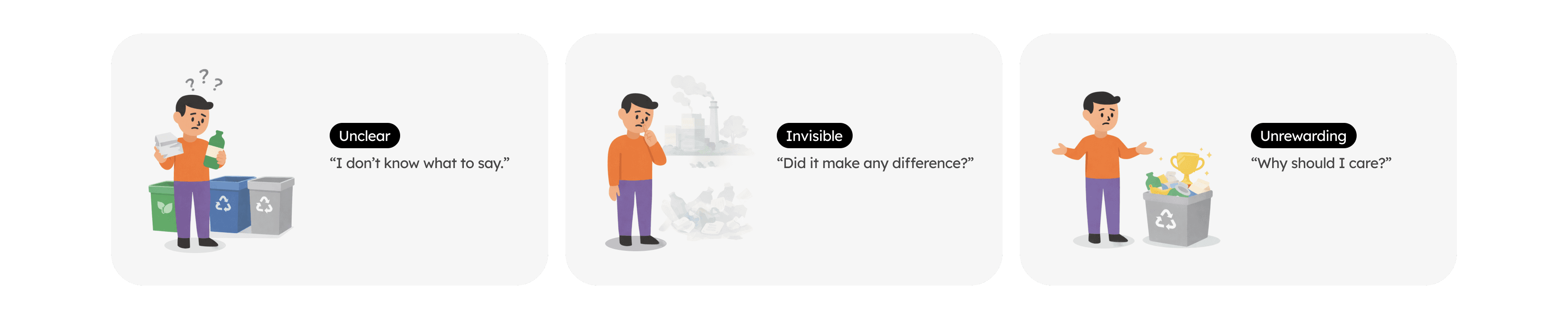
Recycling isn’t broken because people don’t care.
It fails because the system is confusing, invisible, and unrewarding.
In the U.S., over 300 million tons of waste are generated every year, yet up to 25% of recyclables are incorrectly sorted due to unclear rules. Despite its importance, recycling remains a confusing, invisible, and unrewarding experience - making it hard for people to turn it into a lasting habit.

Design strategy
To turn recycling into a repeatable behavior, I focused on designing a system that is not just usable - but habit-forming.
Recycling is often unclear and invisible.
I designed for instant clarity - so users know what to do and why it matters.
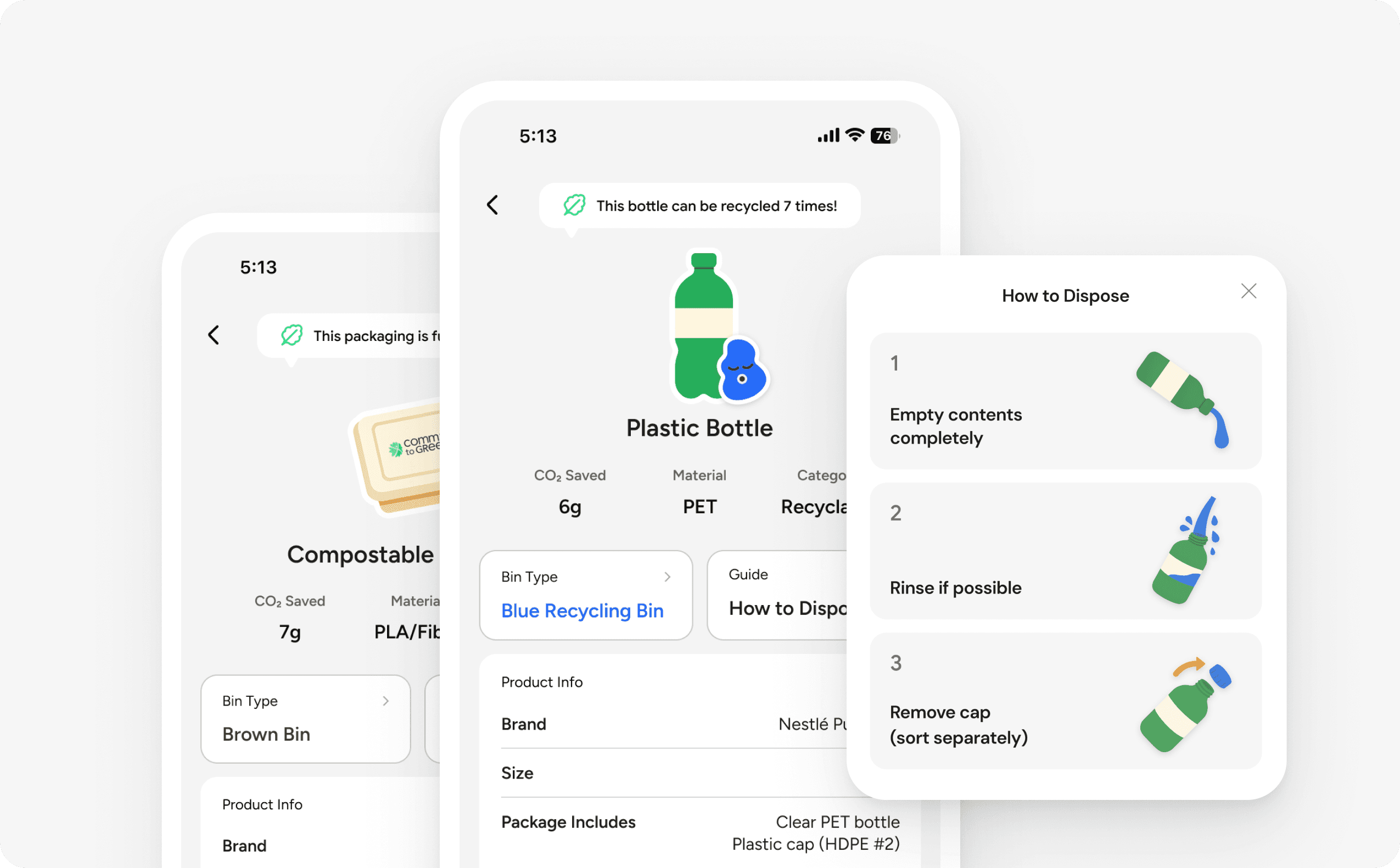
Recycling fails when decisions feel isolated. I designed a loop that encourages repetition.
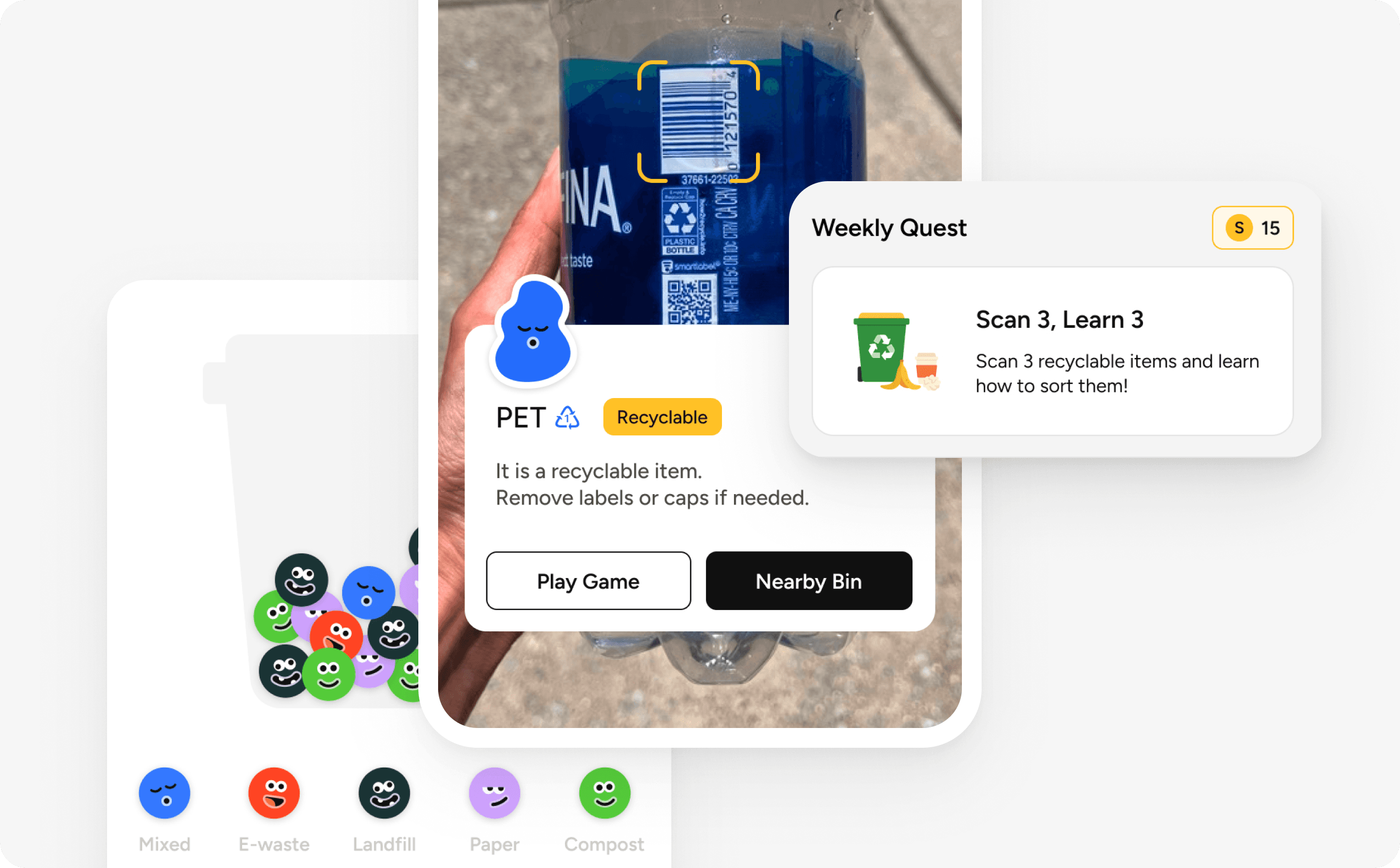
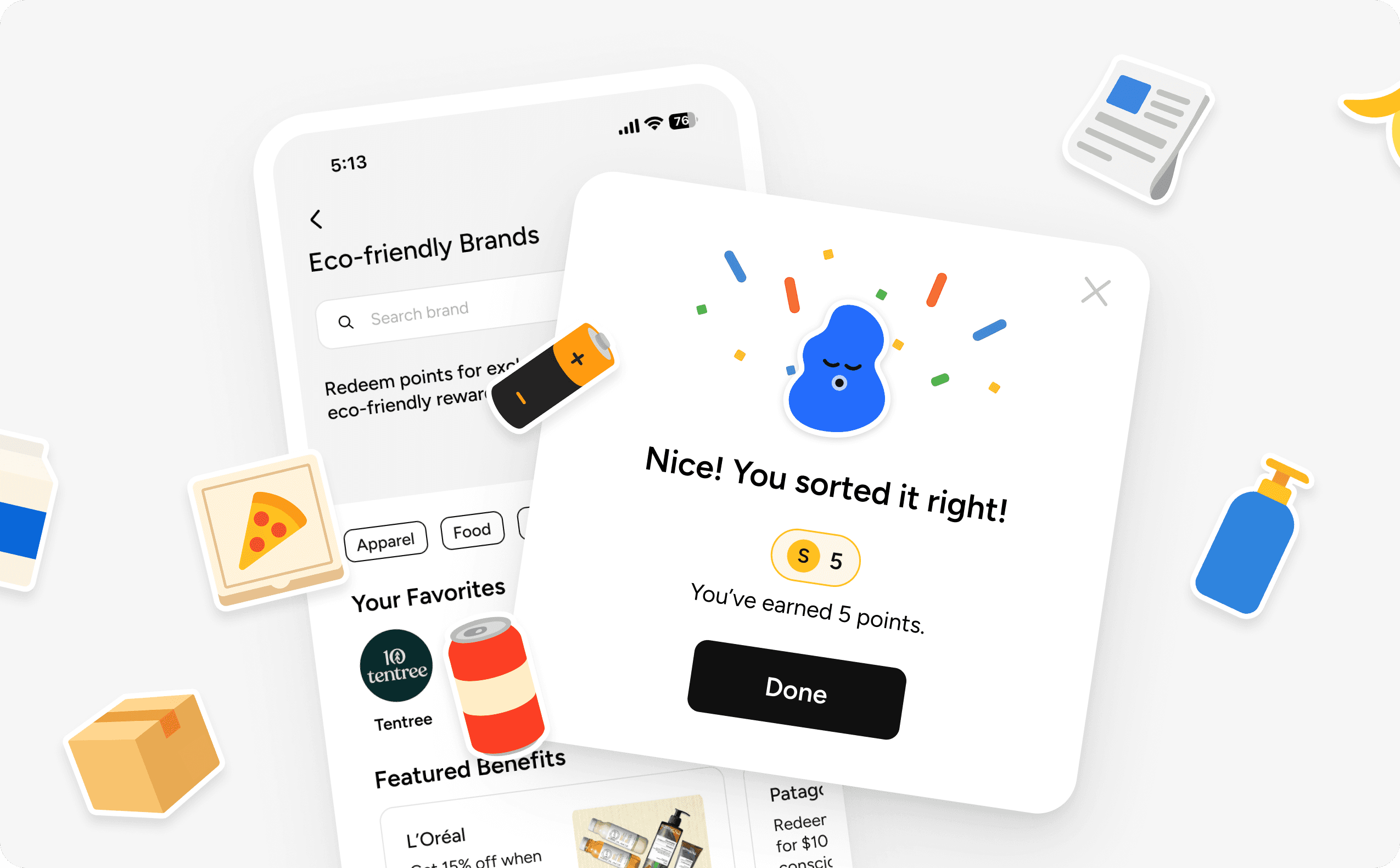
Behavior doesn’t stick without feedback. I linked actions to rewards and real-world impact.
System Overview
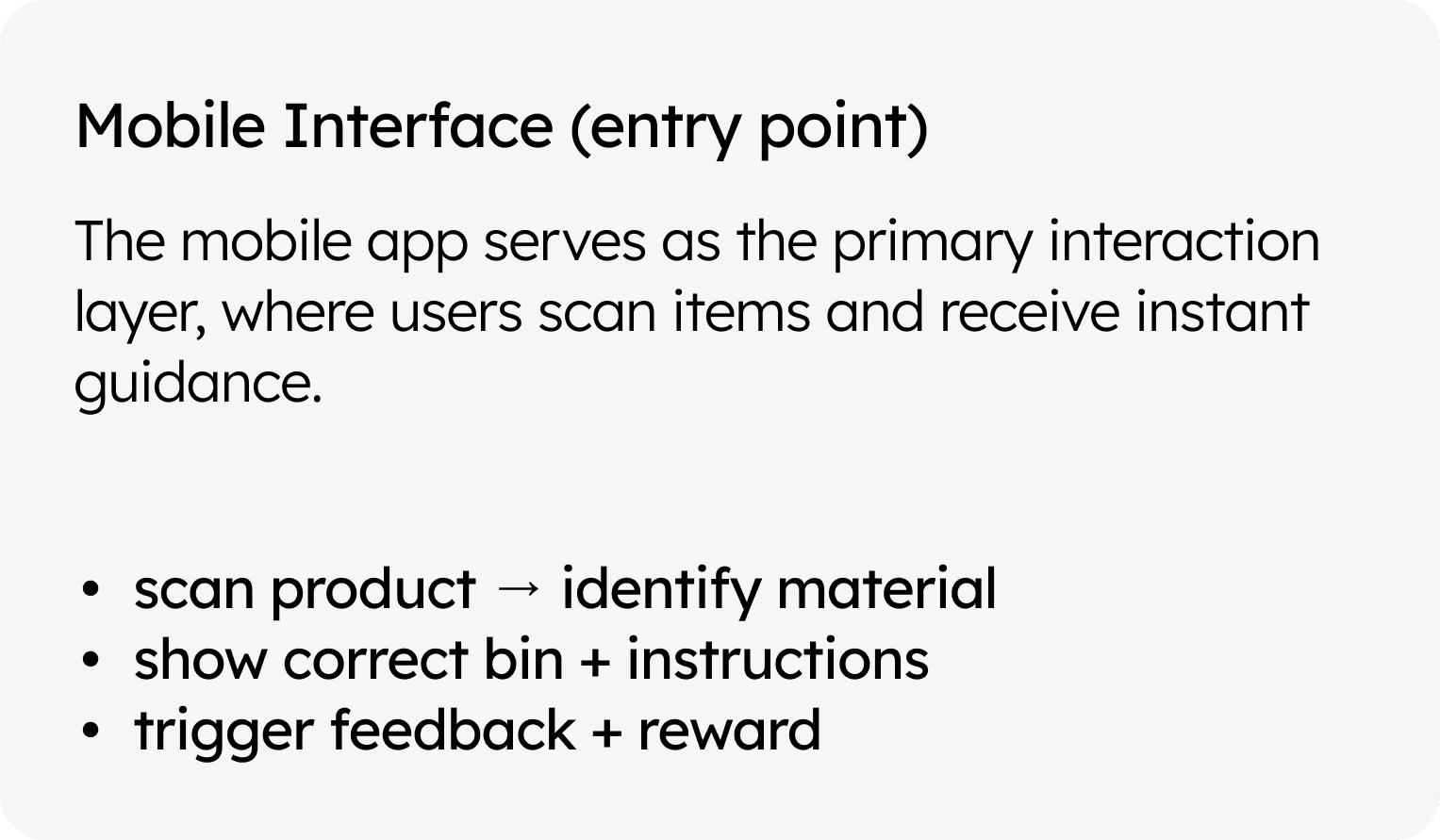
The system works as a continuous loop:
Scan
Understand
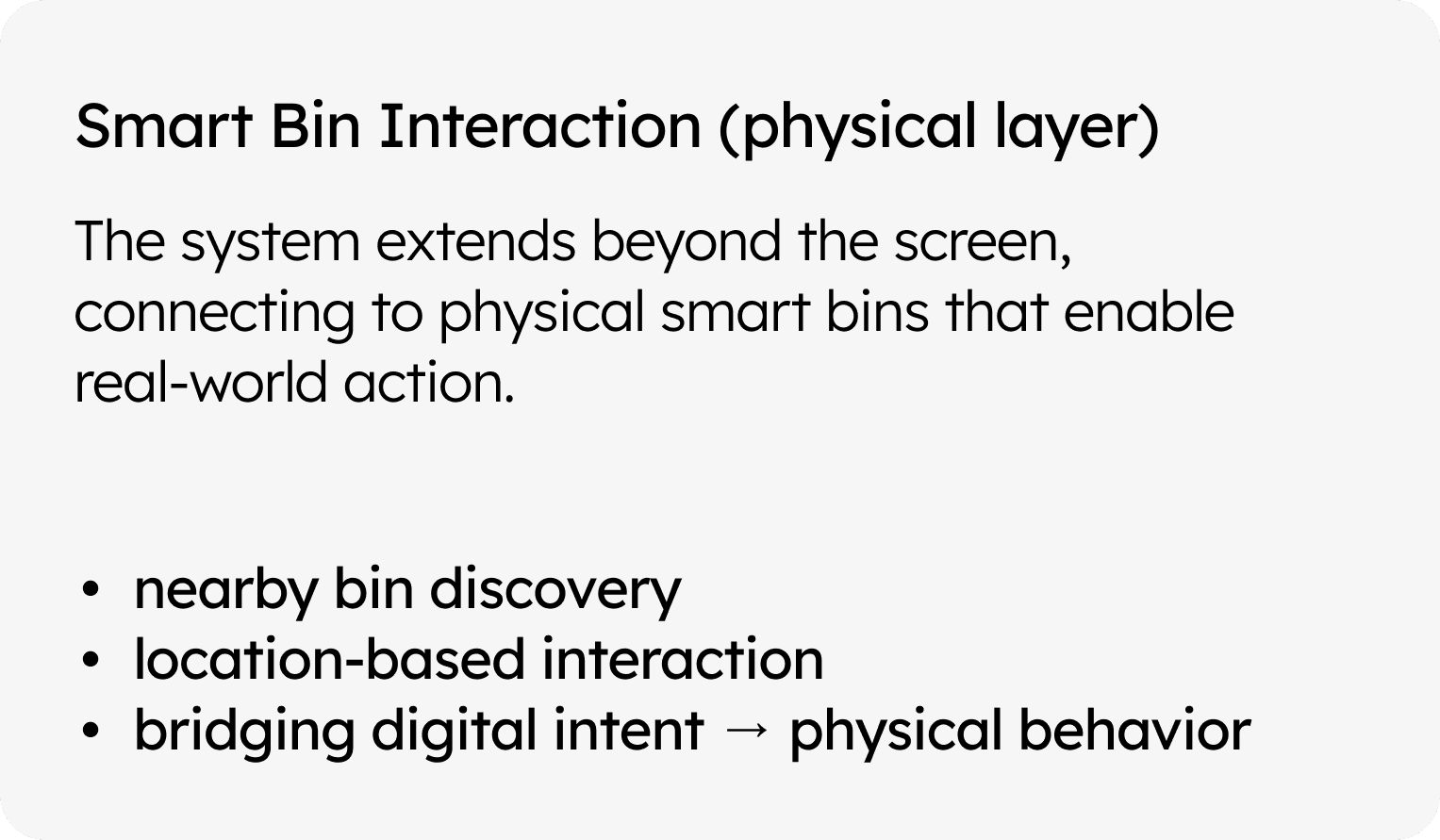
Act
Reward
Reflect
Repeat
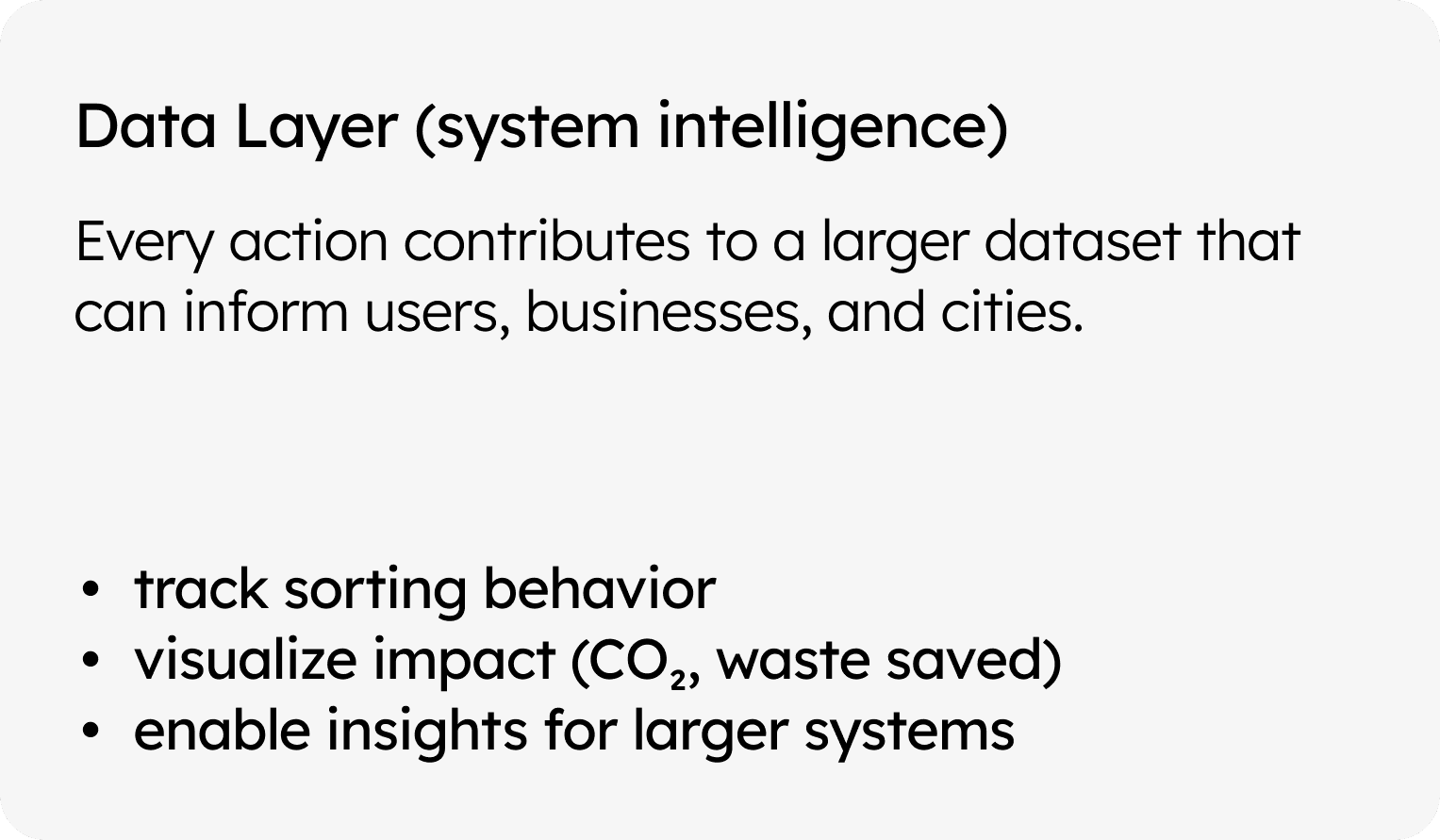
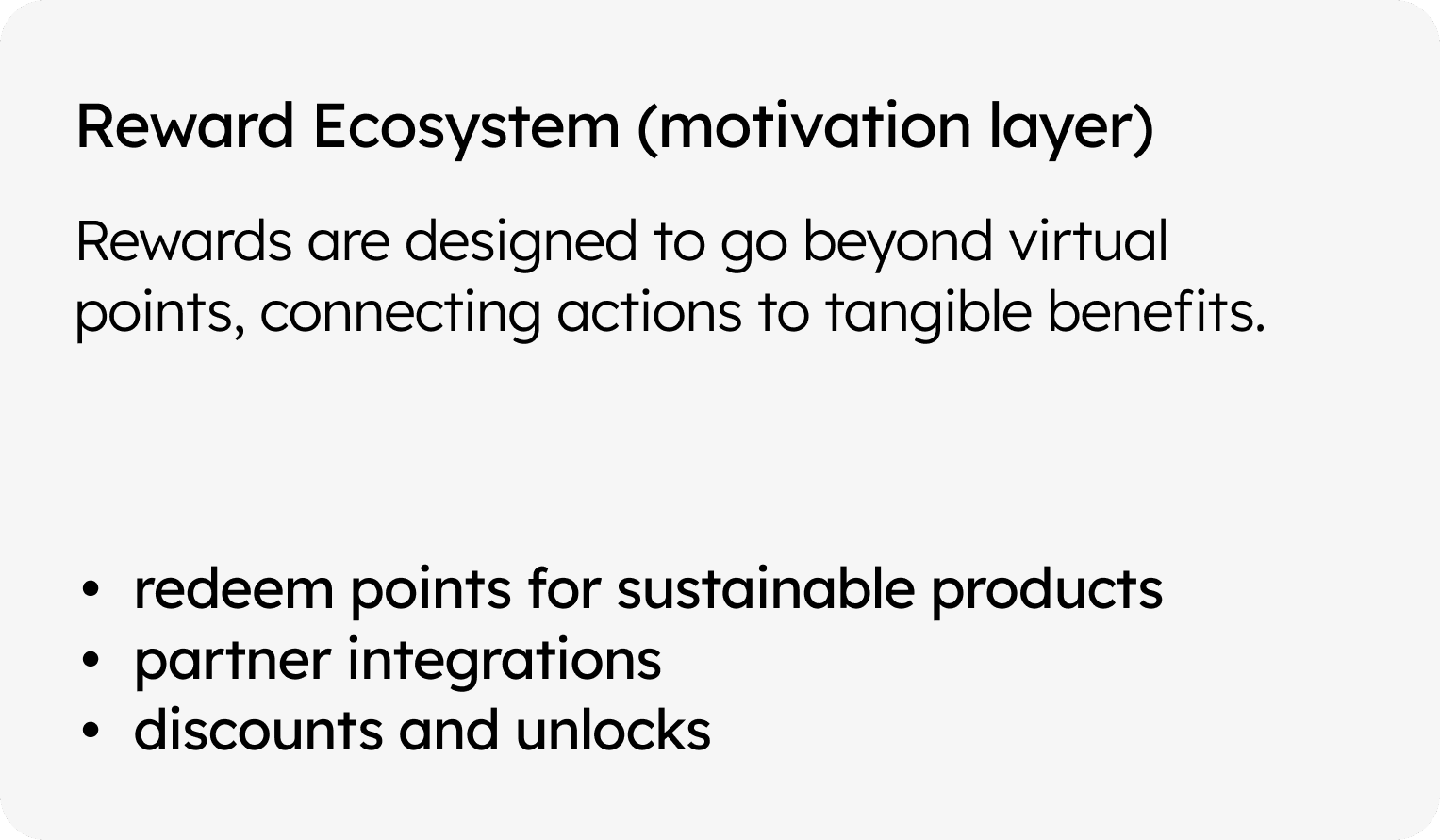
Key Design Decisions
From character-driven UI → structured clarity
In the earlier concept, characters did most of the work. They made recycling feel playful, but they were not the fastest way to communicate sorting information in real-world situations.
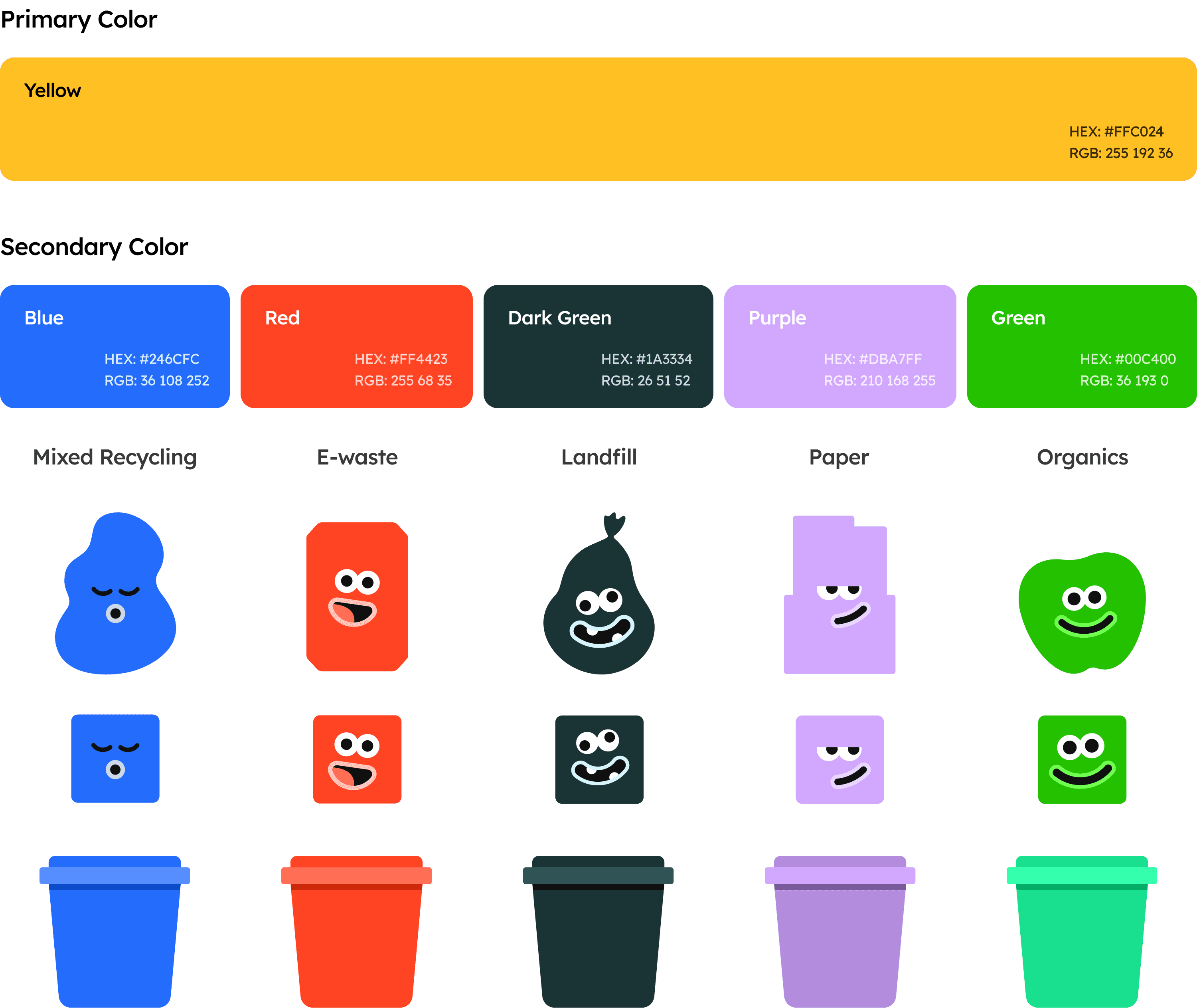
Blue, green, and gray established the core system, while additional colors helped differentiate categories like paper and e-waste. This made the experience easier to scan, easier to learn, and more consistent across bins, guides, and the app.
Key Design Decisions
From symbolic rewards → real incentives
The initial concept relied on playful, symbolic rewards, but these didn’t sustain motivation beyond the app. I shifted to a reward system tied to real-world value, linking actions to tangible outcomes like eco-product discounts. This turns recycling into a behavior users actively return to.
Before
Playful, character-based rewards
Value limited to the in-app experience
Weak reinforcement for long-term behavior
Key Design Decisions
Designing for engagement beyond the ideal flow
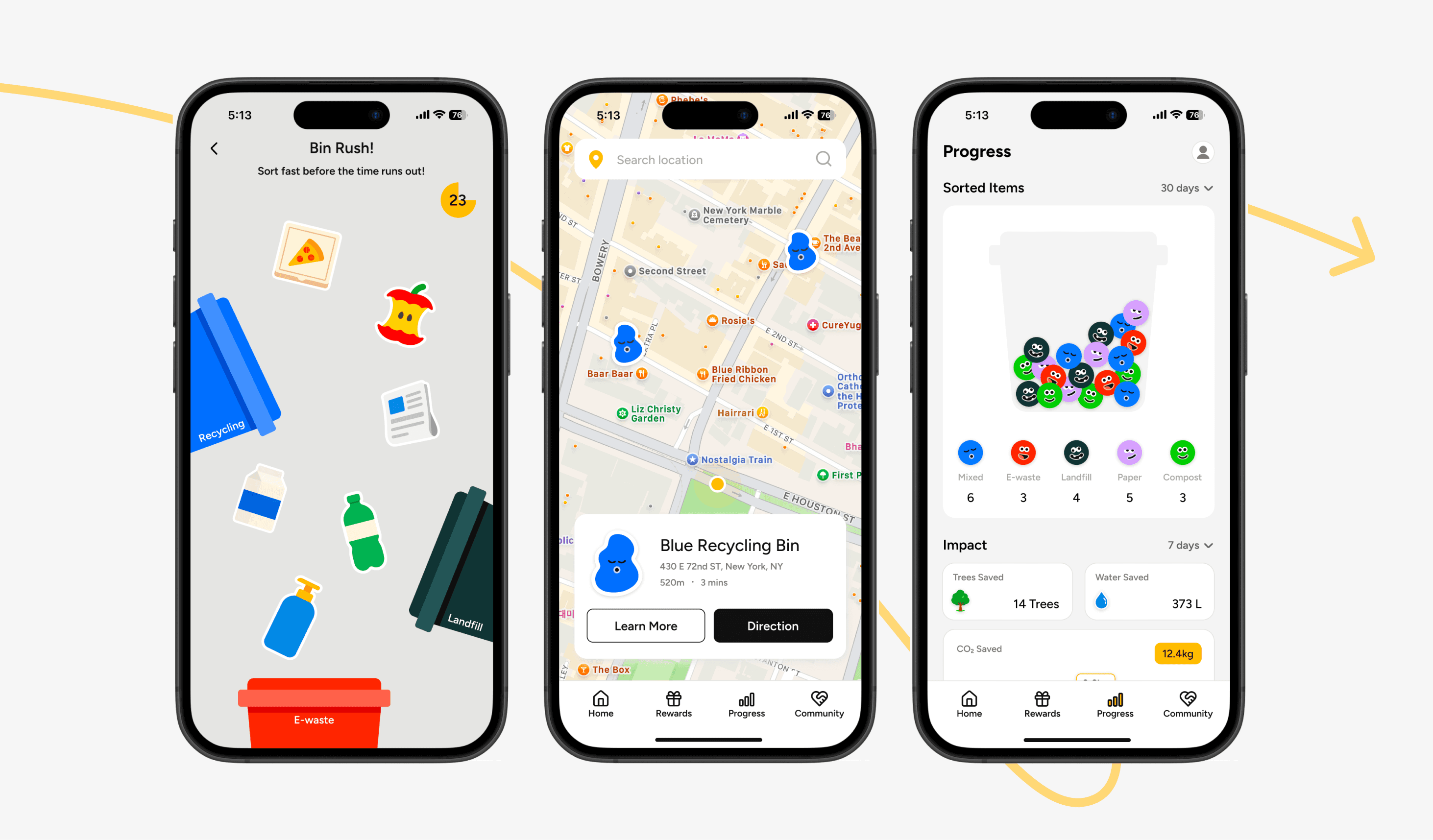
While the ideal flow assumes users dispose of items at a nearby smart bin, I designed an alternative path for moments when they don’t.

Instead of letting the experience end there, I introduced a lightweight mini-game. This keeps users engaged even when they can’t complete the physical action. It transforms drop-off moments into continued interaction, rather than exit points.
In reality, users may not always complete the full recycling flow:
no nearby bin
in a rush
low motivation
What I learned…
Meaningful design isn’t just about interaction.
It’s about enabling behavior that lasts beyond the moment.
A well-designed flow isn’t enough—systems must account for imperfect scenarios, where users may not complete the intended action.
Designing for real-world constraints
While playful elements can attract attention, clear and reusable systems are what enable fast, confident decisions.
Clarity over creativity
Moving from a conceptual idea to a scalable system required balancing engagement, clarity, and real-world feasibility.
From idea to scalable system